A bold, brainy tragedy wrestling with science, sanity, and saving the worldRating
Good
Bloodline Theatre Company presents Panacea written by career research scientist Andrew Singer and company founding member Christina James. It’s a modern tragedy about love, mental health, obsession and the perilous pursuit of saving humanity versus the ethics of scientific ambition. The play centres on microbiologist Professor Augustus ‘Gus’ Jamieson (played with charm and nervous energy by Will Batty), who develops a groundbreaking self-spreading “infectious vaccine” which thrusts him into a moral, emotional, and professional storm. Rooted in the real-world concept of self-disseminating vaccines and the escalating challenges of antimicrobial resistance (AMR), the production mirrors the obstacles and ethical complexities faced by researchers working at the front line of medical innovation.
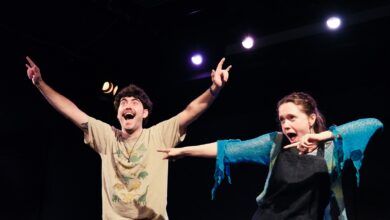
Batty’s Gus is an awkward, earnest and enthusiastic scientist with ASD (Autism Spectrum Disorder), whose sudden rise to prominence brings both opportunity and instability. The people orbiting him form a compelling constellation of pressures as he begins to feel pulled in multiple directions. His therapist, Marti (Emily Wallace), attempts to celebrate his achievements while remaining painfully aware of the toll they may take on his mental wellbeing. The driven and motivated Sophia Fox (Nina Fidderman) pushes relentlessly for the vaccine to reach the public, while colleague Chris Faithful (Charlie Culley) forces Gus to confront the ethical implications of his creation – arguments that are both valid and, to Gus, maddeningly obstructive as he tries to change the world. There is also a romantic thread in the form of Julia Philena (Marianne James), whose companionship offers solace but becomes strained as Gus’s work begins to eclipse their relationship. And, in a surreal but oddly touching device, his cat, Mr Tickles (also Culley), becomes a speaking confidant whenever no one else is present.
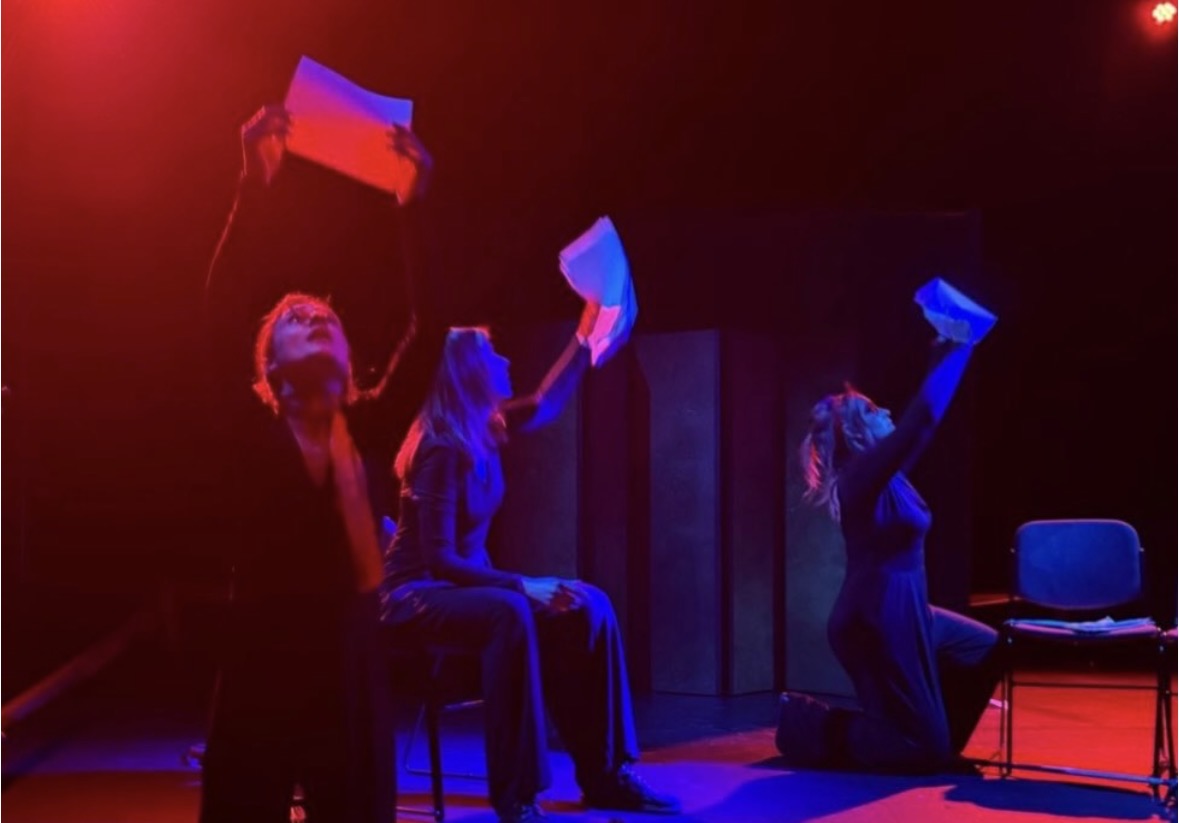
The set is intriguing, with paper littered across a floor cordoned off by red tape – a visual metaphor for the labyrinthine bureaucracy that surrounds medical research. A four-person chorus, speaking in rhyme, bookends each scene in a nod to Greek tragedy, providing exposition and heightening the sense of inevitability. Singer and James weave dense scientific jargon – shaped through collaboration with medical research organisations such as AAREST-AMR and One Health – into dialogue that remains surprisingly digestible. The play grapples with the real-world challenge of tackling AMR responsibly; balancing human and environmental welfare against the drive for scientific progress. A central question emerges clearly: can scientific ambition coexist with ethical responsibility, or does one inevitably suffocate the other?
Panacea tackles an impressive range of themes: the ethics of innovation, the environmental impact of medical intervention, mental health, ASD representation, and a fraught love story. Gus is written with care and dimensionality; we witness his inner world through his relationship with Mr Tickles. However, the ‘brilliant but reality-struggling savant scientist’ occasionally edges towards familiar tropes. With so many themes in play – each substantial enough to sustain its own narrative – the production occasionally feels overburdened. By the final third, the pacing begins to stall, suggesting that a tighter running time might allow the material more room to breathe. Nevertheless, the subject matter is compelling and the emotional stakes remain high.
Despite its density, Panacea succeeds in illuminating the urgent, often invisible battles fought within the scientific community and the company deserves credit for bringing such a vital and under-examined topic to the stage. The play is framed as a meditation on hubris versus humility – ambition against circumspection – and that tension pulses through every scene with sincerity and intellectual curiosity. It dares to ask whether saving humanity might require saving scientists from themselves. Theatre like this helps to bridge the gap between scientific innovation and the public’s understanding of the ethical dilemmas shaping our future. Conversations around these topics might indeed be richer for it, ultimately benefitting us all.
Writers: Andrew Singer & Christina James
Director: Christina James
Producers: Claudia Vyvyan & Francesca Gregson
Assistant Director: Freya Griffiths
Presented by Bloodline Theatre Company
Panacea plays at Riverside Studios until Saturday 21 March.