A visually stunning and psychologically rich triumph, Scottish Ballet’s Mary, Queen of Scots transforms historical rivalry into haunting physical theatre. Sophie Laplane’s choreography blends classical discipline with contemporary power to create a production that is intellectually compelling and emotionally devastating.Rating
Unmissable!
History has often framed Mary, Queen of Scots as a romantic casualty — a queen undone by love, rivalry and fate. Scottish Ballet’s staging at Sadler’s Wells refuses that simplification. Here, Mary’s story unfolds as political drama and psychological tragedy: power negotiated through the body, identity shaped by surveillance, and sovereignty revealed as far more fragile than myth suggests.
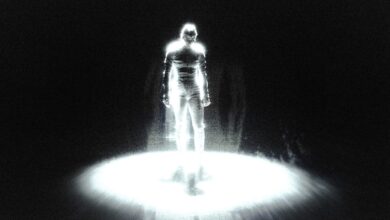
Framed through Elizabeth I’s late-life hauntings — memories both real and imagined — the production positions Mary not simply as rival but as an enduring presence, a figure who refuses to be erased by political necessity.
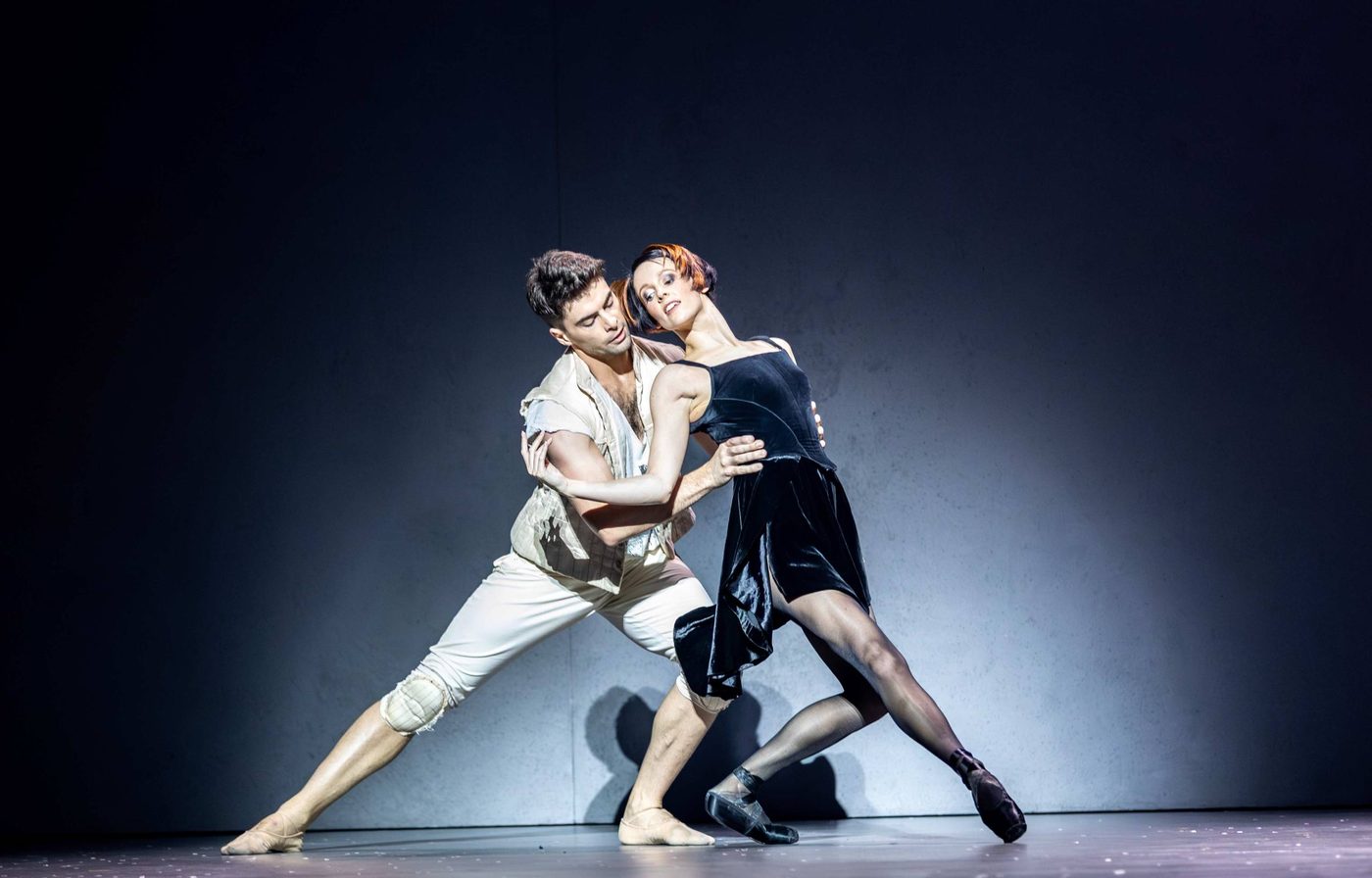
In ballet, where emotion must live inside gesture rather than speech, that tension becomes profoundly visible. Mary’s authority is etched into posture, her exile into movement, her vulnerability into sudden stillness. Sophie Laplane’s choreography fuses classical precision with contemporary attack, allowing the body to carry the weight of ambition, accusation and faith.
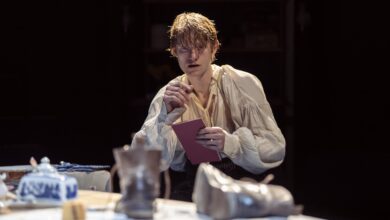
At the centre of the production is Roseanna Leney’s compelling Mary, a performance that balances regal authority with emotional exposure. Her movement carries both defiance and vulnerability, capturing the paradox of a queen whose power is constantly contested. Leney dances Mary not as a historical symbol but as a woman caught within forces larger than herself — faith, politics and survival written visibly through the body.
Charlotta Öfverholm’s Older Elizabeth provides the production’s haunting frame. Watching the past unfold with a presence that is both regal and weary, she embodies the long shadow of power. Often still while the world moves around her, Öfverholm suggests a monarch forced to live with the consequences of decisions history has already sealed.
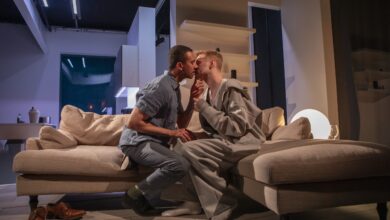
Soutra Gilmour’s striking contemporary set avoids museum-piece nostalgia. Instead of recreating Tudor grandeur, the stage feels exposed and deliberate — a court stripped of comfort where spectacle and scrutiny coexist.
Live music from the Scottish Ballet Orchestra, performing a new score from the team behind Coppélia, drives the production with relentless urgency, heightening the sense of inevitability surrounding Mary’s fate.
At the centre lies the extraordinary psychological mirroring between Mary and Elizabeth. Rather than presenting a heroine and villain, the choreography frames them as doubles — two women navigating systems designed to contain them.
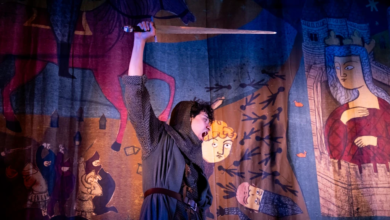
There is something quietly radical in seeing this story told through ballet. Rather than relying on dialogue or historical exposition, the production allows power, rivalry and memory to be carried through the physical language of the entire company. Laplane’s choreography gives the court itself a restless energy, with bodies shifting between loyalty, suspicion and spectacle. Authority here is not spoken but embodied, turning movement into the production’s most powerful form of storytelling.
Ultimately, Mary, Queen of Scots feels less like historical retelling and more like a meditation on the emotional residue of power. What lingers is not the execution itself, but the silence that follows — the cost of authority measured not in crowns, but in solitude.
Choreographer & Co‑Creator: Sophie Laplane
Director & Co‑Creator: James Bonas
Original Score: Mikael Karlsson & Michael P. Atkinson
Set & Costume Designer: Soutra Gilmour
Lighting Designer: Bonnie Beecher
Projection & Video Designer: Anouar Brissel
Produced by Scottish Ballet
Mary, Queen of Scots plays at Sadler’s Wells until Sunday 8 March.