A world premier presenting dozens of slices of ordinary life over five decades. The writing and performances are excellent.Rating
Excellent
Pitsmoor, Sheffield, 1969. As the moon landings happen, a confused old lady leaves her house. Fast forward to 21 March 1970 and Brian and his pregnant wife, Kathy, are the new occupiers, renting it from the council. The play then moves into multiple snapshots of their lives rapidly moving through time to 2024. All their familiar struggles are presented as the world turns and recognisable events in time frame their story.
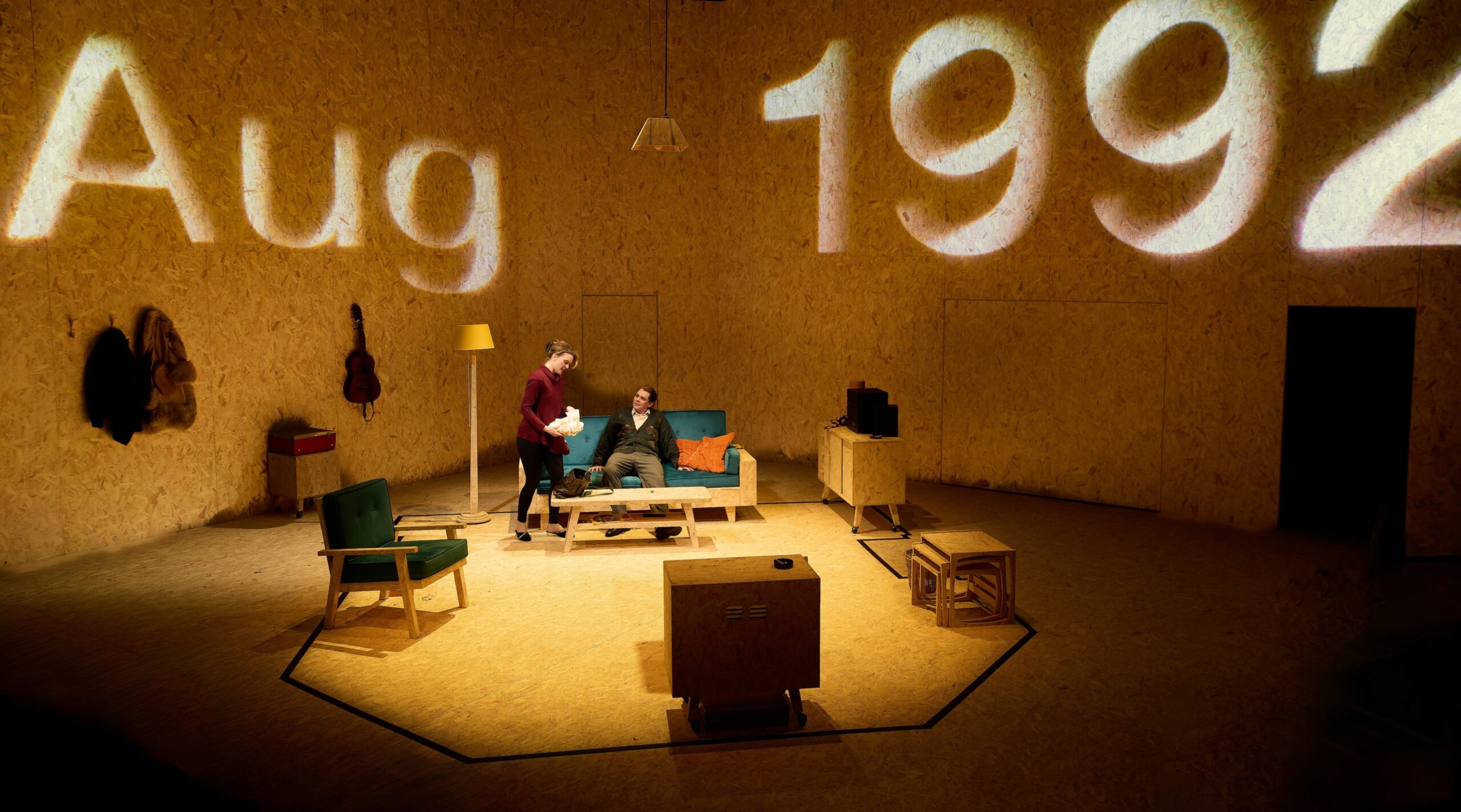
The scenes shift imperceptibly with no interruption in the dialogue. It’s as if we are watching a recording and keep fast forwarding to a new scene, sometimes before the previous scene feels completed. The timing of the changes is seamless and impressive; they flow into each other with remarkable fluidity. The clothes change, the furniture and props are updated during the onstage action and the audience hardly notices it happening. It’s all done incredibly well. The relevant date is projected onto the back walls of the living room as the scenes move on, which is a welcome and effective device.
The acting is first rate, particularly from the central family. Liz White is hugely impressive as Kathy. She starts the play as a pregnant 19-year-old and ends it in her 70s. Her gradual transformation is stunning as her whole physicality changes, and her voice and mannerisms are perfectly judged. She is entirely believable throughout and hardly leaves the stage during the almost 3 hours of the play. Her portrayal is breathtakingly good. Kenny Doughty gives an engaging performance as Brian. He also does a grand job convincing us as his character ages and changes from a shiftless layabout, through being a businessman to suffering cancer. The chemistry between him and White is excellent.
There is plenty of comedy sprinkled throughout, much of it coming from Samuel Creasey and Abby Vicky-Russell as the children Mike and Rebecca. They portray their roles from toddlers through to adulthood and are both sublime. When Kathy and Brian struggle to operate their new VCR in 1981, Creasey is wonderful as frustrated 11-year-old Mike, who could have done it easily if they’d only let him. Vicky-Russell’s back chatting teenager is spot on. Their development into adulthood is also beautifully acted.
Sheffield writer Leo Butler says this is the most ambitious and personal play he has written. He grew up in a similar environment and it’s clear from the authenticity of the characters and dialogue that he is writing from personal experience. It is totally relatable and so much of what is presented feels familiar, sometimes uncomfortably so.
Real events signpost the passage of time. There are references to decimalisation, the common market, Star Wars in the 1970s. John Lennon’s murder, the miners’ strike, CDs, Live Aid in the 1980s. In a few seconds of shocked silence, the events of 9/11 are perfectly portrayed. And so it goes, right up to the heartbreaking effects of Covid-19 on a person living alone. Kathy’s mental and physical decline at this stage is cleverly signalled by the projected dates initially becoming blurry and then failing to appear at all. It is beautifully acted, but this part of the play feels a little overdone and drawn out compared with the frenetic pace of the previous action. As the house is resold another young couple with a baby on the way take possession and the circle of life continues.
When the cast assembled for the final bow, I was amazed that there were only eight of them playing so many roles. The intimate Tanya Moiseiwitsch Playhouse is the perfect setting for such a personal play, but this powerful production deserves a much larger audience.
Written by: Leo Butler
Directed by: Abigail Graham
Set and Costume Designed by: Sarah Beaton
Lighting Designed by: Matt Haskins
Sound Designed by: Annie May Fletcher
Video Designed by: Dan Light
Movement and Intimacy Director: Angela Gasparetto
Living plays at the Tanya Moiseiwitsch Playhouse until Saturday 4 April.