A sometimes playful, sometimes sinister exploration of a binary construct, through tai chi inspired dance. Rating
Good
The atmospheric cavern of the Coronet Theatre is a receptive arena for watching Taiwanese duo Lu Ying-chieh and Lee Kuan-ling push and pull each other for 45 minutes. A liminal space caught between late-Victorian opulence and an affectionately dog-eared aesthetic, this is the perfect setting for the navigation of being caught up in assigned roles, rules and spaces that Push and Pull strives towards.
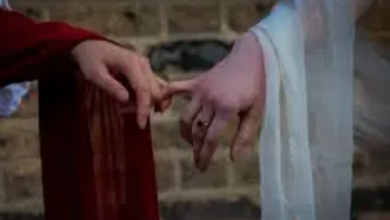
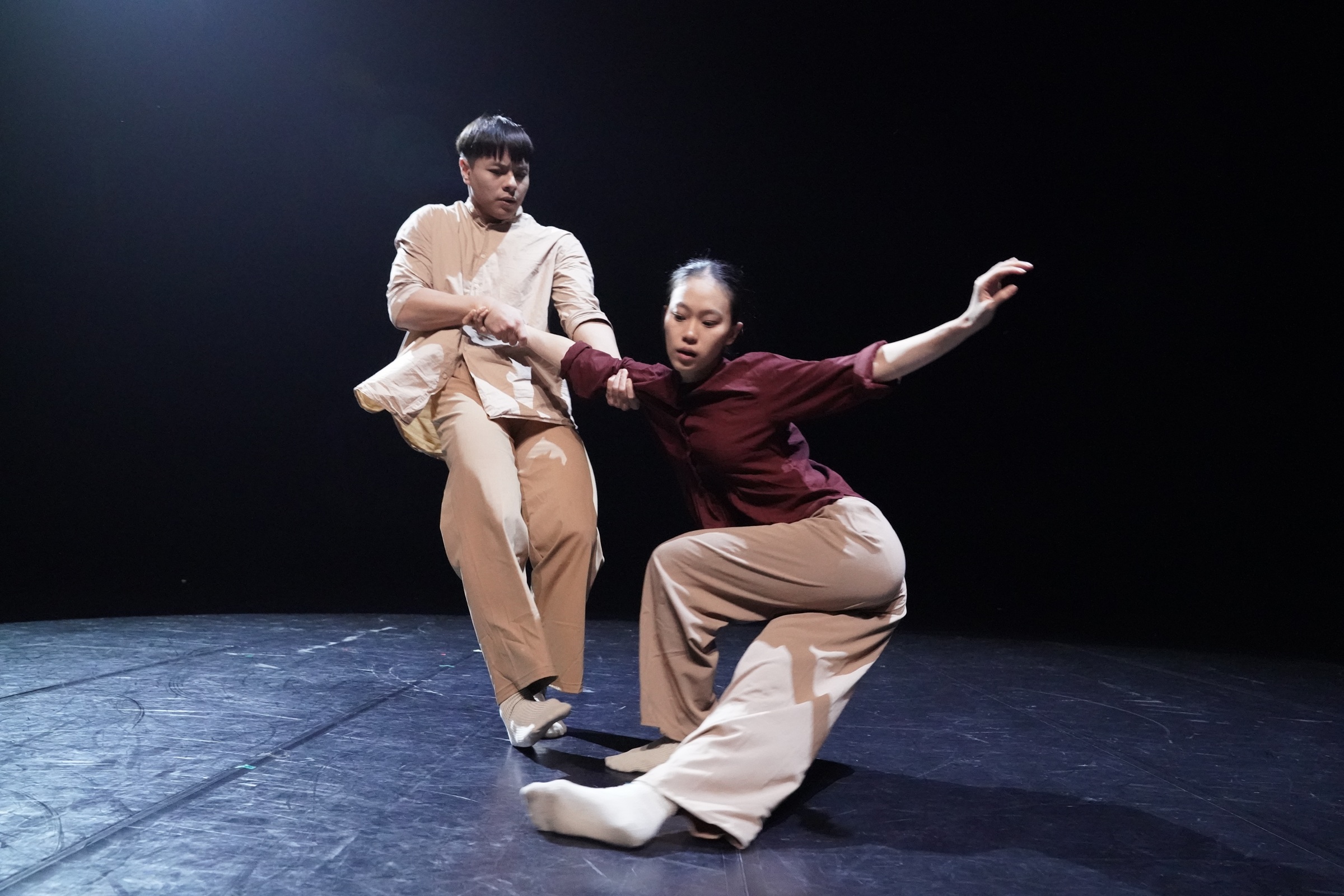
The pushing is initially quite distressingly one-sided, as Lee spins Lu around like a ragdoll, with her double-jointed elbow bent inward, seemingly testing her shoulder socket like a child playing with a toy by testing it to destruction. This doubles down when Lu’s swaying arm is repeatedly slapped down by Lee. The domination creates a strong, if uncomfortable narrative. The iterative tension music only adds a sense of menace. Perhaps because Hans Zimmer uses this ‘Shepard tones’ effect, and heavily scored Bladerunner 2049 with it, it has connotations of a man playing with an android woman with complete objectification, almost seeing if it can be broken because ‘it doesn’t have feelings’. There is a lot of push in this section, with not much pull from the female side, and the gender roles do seem very important at this stage. The performance does move away from this domination, but if it is supposed to start disturbingly then it works.
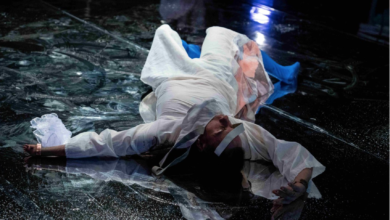
Of course, skill is required to pull off this kind of lifeless helplessness. Lu’s contortions are the cornerstone of the technical dance as Lee is much more passively stoic during the dance elements. There is a lot of storytelling too, as the minimal set furniture is dismantled and reassembled and they carry an illuminated water flask that often looks like a firefly in the way it is lit. The fluidity of the water together with the bodies is an interesting element, but it’s hard to know what precisely to make of it.
Towards the end there is a return to play as the table and chairs are packed back into a slab, almost like tidy-up time at the end of the school day. Lee assiduously slots the pieces together while Lu mischievously scuppers his careful reassertion of order. The bare stage, minimal set and non-verbal form seem to limit the variety of push and pull available. Sound and lighting can do a lot, but there is only so much texture they can create to work within. There is a nice section where new spaces through ‘doorways’ are revealed by the casting of light in different directions, like stumbling through a great house or hotel full of doors, to find vast worlds behind each one.
It is possible to tease out and start telling a story within a short performance, which is a great achievement when it does not fall back on verbal cues, or rely on specificity to convey meaning. But then in turn, there is a danger of lingering in generalities and repetition, testing the audience constantly to conjure and conjecture associations. Here, even at a modest 45 minutes, the use of essentially two opposing modes – push and pull – mean the performance can be limited in its scope, leading to repetition and a lack of fresh perspectives. There is some additional reading on the website about the autobiographical aspect to the work, and the role of Taiwan in particular. This is genuinely interesting, but hard to imagine anyone picking it up independently. That said, at its nuclear best the show is a highly evocative and atmospheric success.
Artistic Director & Choreography by Lai Hung-chung
Lighting & Costume Concept by Lai Hung-chung
Technical Director & Lighting Design by Tsai Chao-yu
Music by Kuo Yu
Push and Pull plays at The Coronet Theatre until Sunday 14 March.