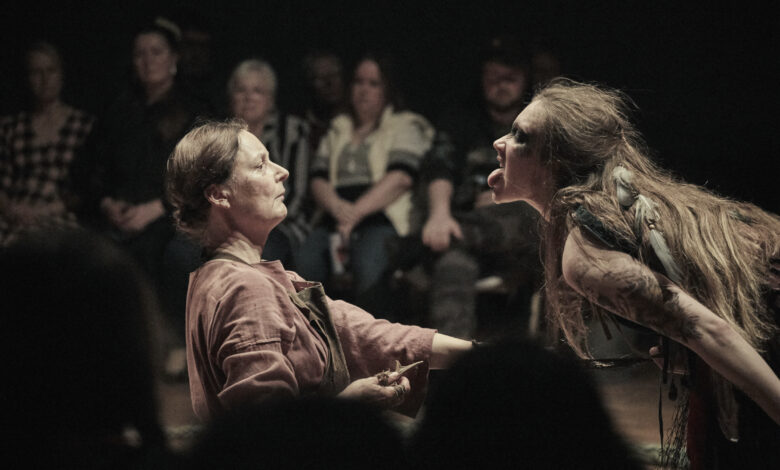
Beau Hopkins serves up SALT
It’s not often you get sea shanties in the middle of London, but very soon they will indeed be coming to the banks of the Thames, as Great Yarmouth company Contemporary Ritual Theatre (CRT) bring SALT, a tale of ancient fisherfolk, to Riverside Studios. We were interested to know more about the show and the company’s distinctive performance style so asked writer and director Beau Hopkins for a chat.
Hi Beau. Thanks very much for talking to us today about SALT. Can you firstly give us an idea of what the show is about?

SALT is a folk tragedy set in a primitive, God-fearing fishing community on the East Norfolk coast. The year is 1770. This is a wild and violent world, where men and women must struggle for survival: and over every hard and bitter day falls the shadow of death; for they live by the mercy and bounty of the sea, the great giver and taker of life.
Our story concerns a hulking but childlike young fisherman, Man Billy, who lives in a hut among the dunes with his domineering mother, Widow Pruttock. Billy longs to go away aboard the larger fishing vessels with the other men of the village, but his mother is determined to keep him close: knowing her son is prone to outbursts of savage violence, she fears what might happen should she let him go. Into this cold and thwarted life comes Sheldis, a traveling singer with supernatural gifts. A wild, spirited but sinister figure, Sheldis is determined to unloose the passions and desires trapped within Billy and Pruttock. But as Billy’s obsession with her grows, Pruttock, believing him bewitched, will do anything to break the spell.
Filled with sea shanties, folk hymns and raucous dances, SALT is a visceral and mesmerising journey into a stark, mythic world of salt and song. Here the forces of sea and earth collide with magic, terror and elemental passion.
What was your research process like?
Though from the beginning I knew the central character had to be a fisherman, I knew very little about fishing when I started working on SALT. The sea as a giver and taker of life, the coast as a horizon of desire, a ship’s rope as a mooring to the earth and umbilical to hearth and home – these images arose organically from the texture of suggestiveness that SALT started weaving in my imagination; but the actual details of a fisherman’s daily labour and routines were something I had to work very hard to understand, absorb and thread into the play. What time a fisherman left to catch herring, what implements were needed on the boat, the use of gulls and cormorants as navigational aids, and the moonlight shining on oily water showing where a shoal of fish might be: these details opened up a vast horizon that was entirely new to me.
My research into the life of fishing communities in the 18th century revealed another feature of the world of SALT that took work to absorb and integrate: the logic of magic and superstition. It is harder, now, to enter fully into sympathy with a state of mind which views seemingly random acts as loaded with fateful power; but to the fisherman who forbids anyone to whistle on deck lest they summon a storm, or the fishwife who must avoid washing her husband’s clothes while he’s at sea lest she wash the life out of this bones, nature was full of hidden but palpable agencies, forces and lines of connection; simple gestures or encounters might lead to dreadful consequences; amiable or malevolent spirits lurked in stones, trees and animals, and the will of God warred continuously with the mischief of demonic entities. This outlook forms the horizon of consciousness for all the characters of SALT.
You describe the performance style as “ritual theatre”. What does that mean exactly?
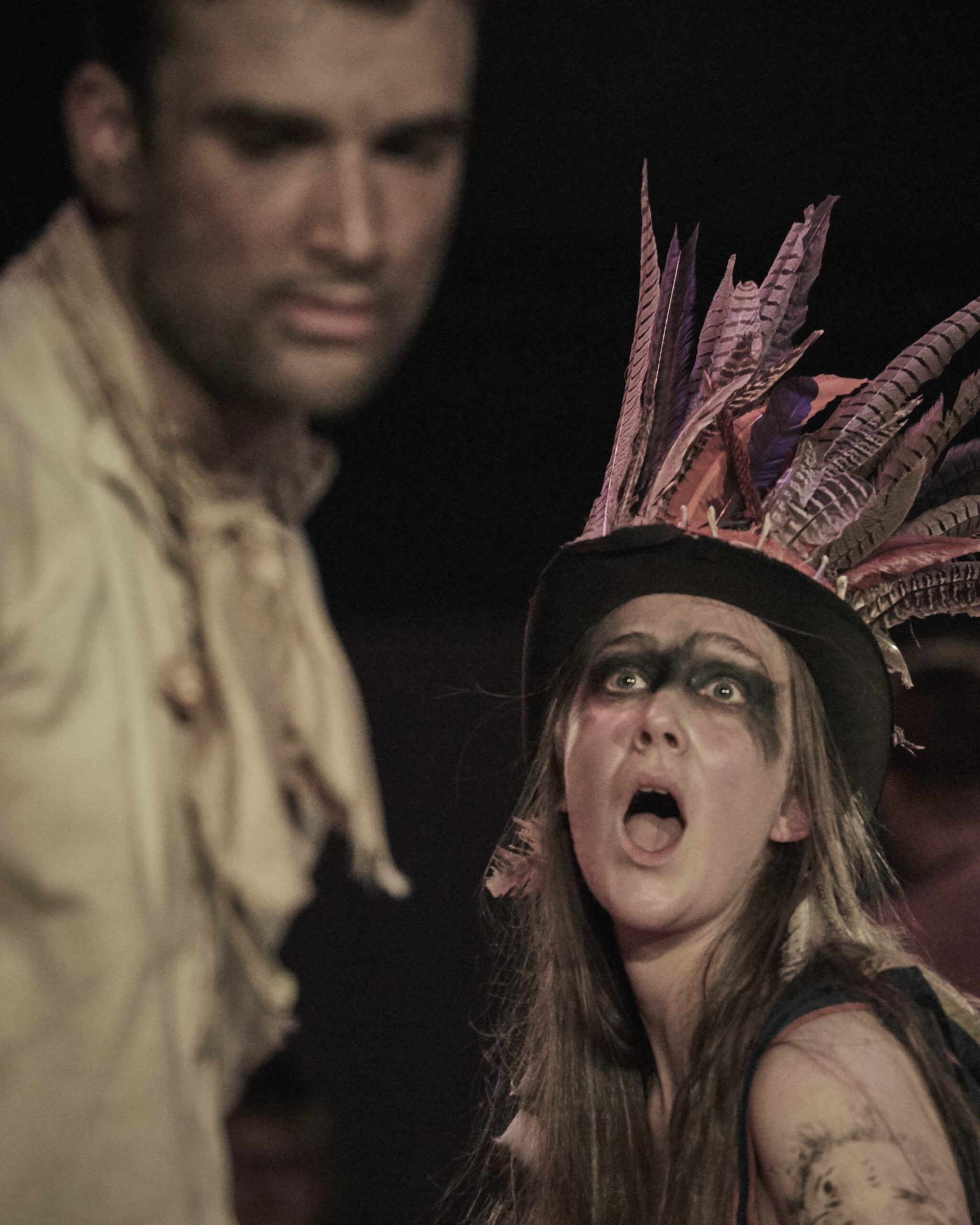
Our company, Contemporary Ritual Theatre, is committed to developing a new form of theatre that strips the apparatus of performance back to the essence of the medium, which is the ritualistic encounter of performers and audience in a shared physical space. Over the course of this encounter, this space undergoes a kind of enchantment, as performers and spectators collaborate imaginatively to conjure from the bare theatre floor a mythic zone in which the play can unfold. Where the performance is successful, the progress of this encounter leads, I believe, to a collective experience of transformation: we leave the theatre feeling subtly redefined, even if this feeling is transient; and where it is enduring, it can deeply mark the lives of those who participated. This is the ritual in ‘ritual theatre’.
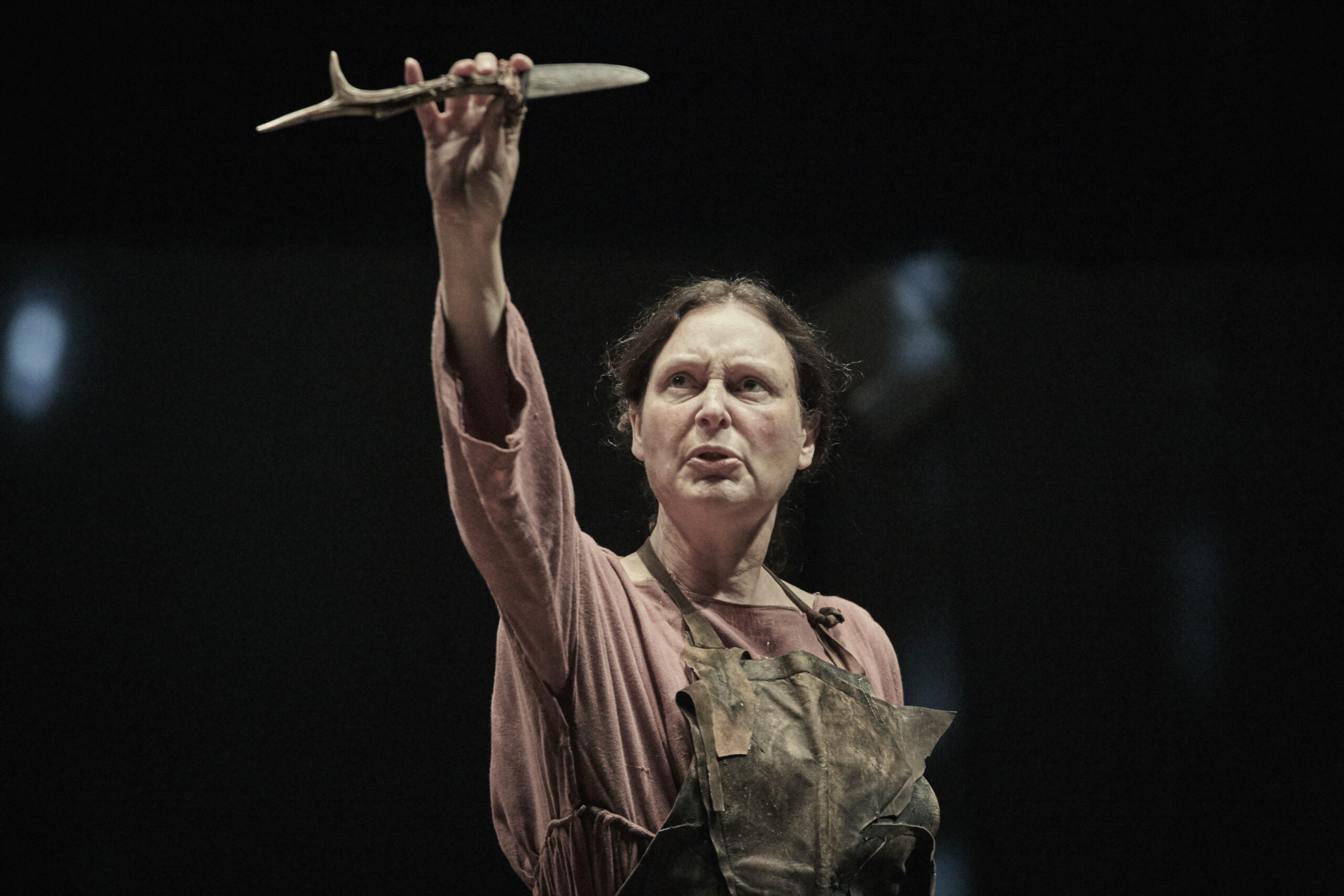
We make this explicit in the very first scene of the play. The three actors enter and lay a large ship’s rope in a circle while singing the sea shanty Haul Away Joe. This opening transports the audience into the world of 1770, while also establishing the key conventions of the play: anyone who is inside the rope is ‘on stage’ – if a character leaves a scene, they simply step outside of the rope; while ‘off stage’ they remain connected to the action within the rope, prowling its edges, weaving in and out of the audience. With this minimal, visceral and rhythmical staging – this connection in and over the rope beats like a pulse throughout the play – we emphasise the physical and imaginative link between performers and audience. We accentuate the sensual and immersive nature of this connection through songs, masking, raucous dances, and improvised percussion using breath, stamp and props such as bones, bottles, knives and baskets.
Tell us about the cast and what they each bring to the production.
SALT is an extremely challenging play for actors: they are on stage constantly; they play multiple roles as part of an ensemble; they sing, dance and perform stylised movements while using a poetic language that blends Norfolk dialect and Shakespearean diction and rhythms. On top of that, they must incarnate characters who are wild and brutal, often violent, often vicious; and they must reveal the essential humanity of these savage folk without diminishing their darkness. They must both shock and attract the hearts of the audience. That is a lot.
But I have been blessed to work with three exceptional actors. Each have brought distinct qualities, ideas and talents to the production.
Mylo McDonald, playing Man Billy, brings immense physical and emotional power to the role. Technically extremely skilled, Mylo is also capable of great imaginative suppleness, subtlety and precision; and he has created an extraordinary icon of childlike innocence fused with jarring brutality in his rendering of Billy, shaping the extremes of thought and being demanded by the role into a journey to discover the fisherman’s missing soul.
Emily Outred, playing Widow Pruttock, has an astonishing gift for uniting power and pity: her Pruttock is a monumental and commanding figure; but Emily’s raw, tormented grace in the role succeeds in casting a kind of ghostly light on the anguished and neglected realms of feeling behind the imposing facade, revealing the sensuality and vulnerabilities that haunt the yearning and thwarted core of her character.
Bess Roche plays in many ways the most challenging role – Sheldis has a dual and uncertain nature: a menacing figure seemingly possessed of otherworldly powers, she is also prone to the human agonies of love and loss. But Bess’s amazing performance combines her great for vivacity, suddenness and changeableness – restlessly shapeshifting between ferocity and humour, aggression and hurt – with a forensic commitment to detail and precision. She manages to make Sheldis both richly contradictory yet perfectly simple, and whole: a vicious and tender creation, at once an ageless mother figure rooted in the blind cycles of birth and death, and a shunned and maimed outcast, cursed to wander and never belong.
All three performers have given themselves body and soul to their performances, and it shows. In their connection to each other lies the anguished and beating heart of SALT.
Can you talk a little about the music in the show?
The soul of SALT, I would say, unfolds in its music. I listened to hundreds of songs – mainly traditional folk tunes – when writing the play, and the ones I decided to incorporate – work songs, sea shanties, hymns and ballads – act as abrupt and moving windows into the inner lives of the characters. They also comprise a sequence of aural images, a tapestry of sound which knits the characters to their beginnings and ends, and threads together an emotional and spiritual narrative that lies outside the flow of speech and action.
The characters of SALT are wild, untutored and illiterate: they do not articulate their thoughts and feelings with the facility of educated people. They reveal themselves through actions, whether acts of violence or tenderness, rather than words. But at this time in history working people would have known dozens, sometimes hundreds of songs by heart. Not only was this an oral inheritance passed down from generation to generation that served to regulate and alleviate the monotony of the labouring day, it brought people together and united them in a collective feeling, a zone of expressiveness that allowed them to briefly glimpse their lives from a more aesthetic and spiritual perspective. When the actors sing in the play, we feel a similar sense of a moment crystalising in the momentum of the story, of beauty emerging from darkness.
SALT has just finished touring across the UK; where was it staged, and how did you come to choose those venues?
In 2025, we toured SALT to fourteen venues across the British Isles, from the Isle of Wight to the Shetland Islands. We performed in circus tents, outdoor theatres, village halls, multi-arts centres and larger regional theatres like the Hull Truck and the Dukes in Lancaster. We spent almost a month together in the Highlands of Scotland, driving from venue to venue in a van. It was an incredible journey, and the play grew with each experience of a different place.
We chose our venues based largely on geography: above all, we wanted to bring SALT to coastal areas where it would chime with local history, heritage and landscape. So we performed in several places where the theatre overlooked the water – Lerwick in Shetland, Findhorn in Moray, Scotland, and in Ventnor on the Isle of Wight. Our last performances took place at the fantastic Marine Theatre in Lyme Regis; and during our final night a storm howled overhead and we could hear the wind thump on the roof and the waves crash against the shingle. The presence of the elements lent an extraordinary energy to the performance; we were reminded of the forces that lay outside our will and control. It was a kind of savage blessing, a sign that we’d come to the right place…
Thanks very much to Beau for giving us a taste of this extraordinary piece of work.
SALT culminates its UK tour with a run at Riverside Studios from Tuesday 3 – Sunday 15 March.