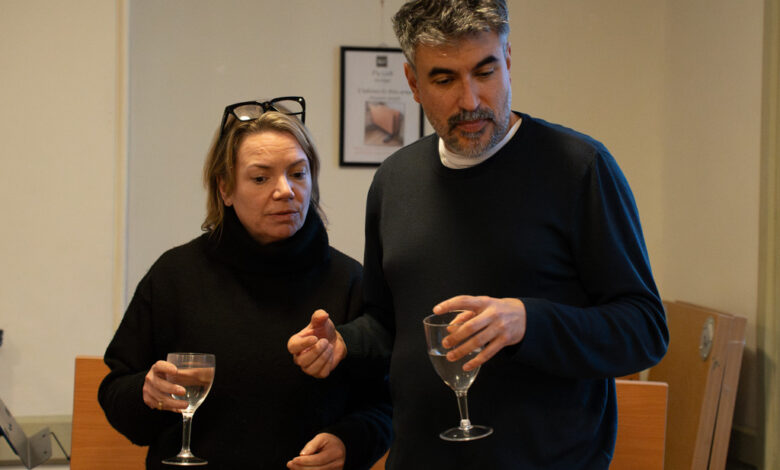
Owen Thomas James chats about directing Wanderlust
For us here at Everything Theatre, Owen Thomas James is a familiar name, You will usually find the name attached to a sharp, insightful review deconstructing the latest fringe production. But this month, Owen is stepping out from the reviewer’s seat and into the rehearsal room as he takes the directorial helm for South London Theatre’s upcoming production of Wanderlust.
Written by Nick Payne (the mastermind behind Constellations), Wanderlust is a daring, “cringe-inducing,” and ultimately tender exploration of why we stray and how we stay. It’s a play that demands a delicate balance of pitch-black comedy and raw vulnerability, a challenge Owen is uniquely positioned to handle.
We sat down with our resident critic-turned-creator to discuss the “messiness” of modern intimacy and exactly what happens to a director’s brain when they know exactly what the reviewers are looking for.
As one of our regular reviewers, how do you think you would open any review of Wanderlust to draw the audience in?
For a play that talks so much about sex, Wanderlust is really about everything we don’t say. I think that’s what’s going to be intriguing for the audience – the immediate sense of recognition. The play is funny, frank, and disarmingly explicit, but hopefully it becomes clear quite quickly that this play isn’t just about sex. It’s about the gap between what we feel and what we’re able to articulate, especially with the people closest to us. Nick Payne places two generations side by side, both navigating intimacy in completely different ways, but arriving at the same anxieties: Am I enough? Am I wanted? I think that universality is incredibly compelling for an audience.
There’s also something quite exposing about the way the play unfolds. It strips back the performance we put on in relationships, and its combination of wit, honesty, and emotional risk really pulls you in. Plus, I hope, the fact that we’ve done a lot of intimacy work to make the lovemaking look very real gets people talking!
The play deals with some very sensitive and explicit themes regarding sex and relationships. How have you worked with the cast to navigate that “squirm-inducing” comedy while keeping the characters grounded and relatable?
There are several scenes that deal with uncomfortable conversations around relationships. The play’s central couple, Joy and Alan, have been married for nearly twenty-five years, and the play opens with their sex life essentially at a standstill. Watching two people who clearly know each other inside out completely fail to communicate about something so fundamental is both funny and genuinely painful. And that tension runs through the whole play.
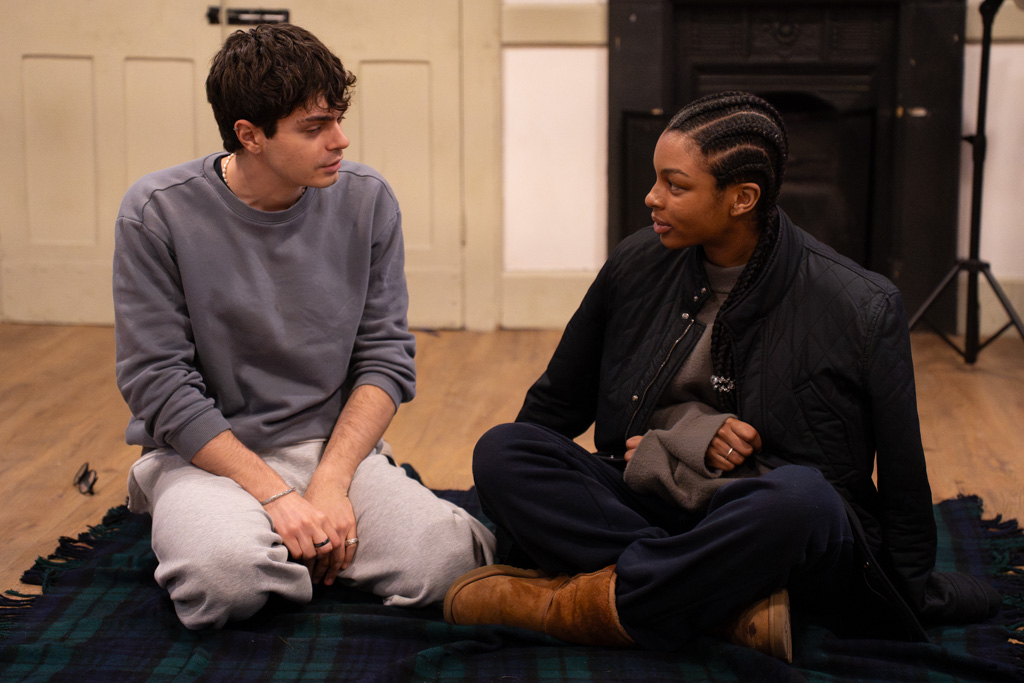
Alongside them, their fifteen-year-old son Tim, and his friend Michelle, are also navigating intimacy, but they’re at the beginning of the journey. Michelle ends up giving Tim a series of ‘practical lessons’ in how to be a considerate lover before he plucks up the courage to ask out the girl he likes. Those scenes are some of the funniest in the play, but also some of the most oddly touching and tender.
We’ve been lucky enough to work with Megan Good as our intimacy co-ordinator. Her role has been essential to make sure the cast feel completely safe, comfortable and in control, establishing clear boundaries from day one and working through the choreography slowly and collaboratively like any other piece of staging. And crucially – we try to laugh about the squirmy bits, because nothing dissolves awkwardness faster than finding the absurdity in a situation together!
How has your experience as a reviewer influenced your directorial process? Does it make you more self-critical, or perhaps more daring in your staging?
In many ways, my approach has been purely driven by the ambition to do the brilliant script justice. We spent the first three weeks of the process doing table work and figuring out each character’s super-objectives, motivations and backstory. The thing about Nick Payne’s writing is that his characters always come first, so it was important to me that the audience start caring about the characters straight away, before they’ve even realised how clever the play’s structure is. Once that was established, I began to think about the ways we could overcome some of the more challenging elements in the staging, like concurrent scenes and – there’s no easy way to say this – sex on stage.
With my reviewer-hat on, a poorly executed romantic scene or an unconvincing kiss can feel really jarring, so I’ve been extra alert to that throughout the process. I want the characters’ actions to feel completely real. Throughout the ensemble work, we’ve continuously held each other to account and asked, ‘is this the story we want to tell?’. That’s kept everybody hyper-focused.
Stephen Hayward’s zonal set design is ambitious, and one of the main motivators for this was to ensure that we didn’t lose the pace of the story from the various location changes that happen quite quickly. Again, thinking about the play from a reviewer’s perspective, I think there’s a risk that the action gets slowed right down, so I was keen to make the transitions as fluid as possible and keep the audience completely invested in the story.
Wanderlust is described as a “painfully funny and brutally honest” look at modern intimacy. What was it about Nick Payne’s script that made you want to bring it to the SLT stage right now?
Wanderlust was only his second ever play, and his first outing at the Royal Court, in 2010. So, first and foremost, not a lot of people will be familiar with this one. And of course, Constellations followed, which is more recognisable and received several Olivier nominations. I think Payne manages to pack in so much drama into relatively short running times in all his plays, but to me, Wanderlust is quite possibly the closest he gets to real life.
We’re living in a world – whether we like it or not – where sex is all around us. Maybe the rise of OnlyFans has intensified its prevalence to the younger generation, but I think our innate sense of desire and wanting to feel desired never goes away. Modern relationships undergo constant pressures, whether that’s simply the demands of everyday life, children, work stress, or having to constantly juggle a hefty work-life balance – but temptation is an obstacle that so many people face. I think this play tests that – it doesn’t push things to extremes – but rather, it presents a believable scenario and almost forces you to ask what you’d do in the same position. I really like the uneasiness of that.
Much of the humour in Wanderlust comes from the “messiness of intimacy.” Is there a particular scene that you think will be the biggest “talk of the bar” by the end?
There’s a scene with Tim, during one of his ‘intimacy lessons’ with Michelle, where he does something so spectacularly ill-judged and yet so completely in character that I think it’s going to get people talking. I won’t say more than that, because half the joy of it is the surprise. But it’s the kind of moment where the audience will be simultaneously covering their faces and absolutely howling, and that balance – the mortifying and the tender landing at exactly the same time – is what this play does so well.
That said, I suspect watching Joy and Alan attempt some roleplay might be a close second. There’s something so painfully recognisable about two people trying really hard to fix something and somehow making it worse.
We can’t end without going back to your own reviewing experience. Are you concerned about what reviewers might say about your show, and especially your directing? Any worries that a show you’ve reviewed in the past might come looking for a spot of revenge?
Terrified! I say this in jest of course – the beauty of theatre is that different things land differently for different people, and I think that genuinely comes with the territory. But to be honest, I feel like we’ve worked as hard as we can to make this feel less like a play and more like real life – and that’s the best defence I have.
What I mean by that is – this is a play about ordinary people. Joy and Alan aren’t in crisis in some dramatic, operatic sense. They’re just two people who love each other and have somehow stopped being able to show it. Tim is a fifteen-year-old boy exploring sex for the first time amidst the pressures all teenage boys face. Our approach has been to resist the temptation to play for laughs or to push the emotion, and just trust that if the characters feel real, the audience will do the rest. That, and I’m hoping the sheer shock factor of some of what happens on stage might just disarm other reviewers completely!
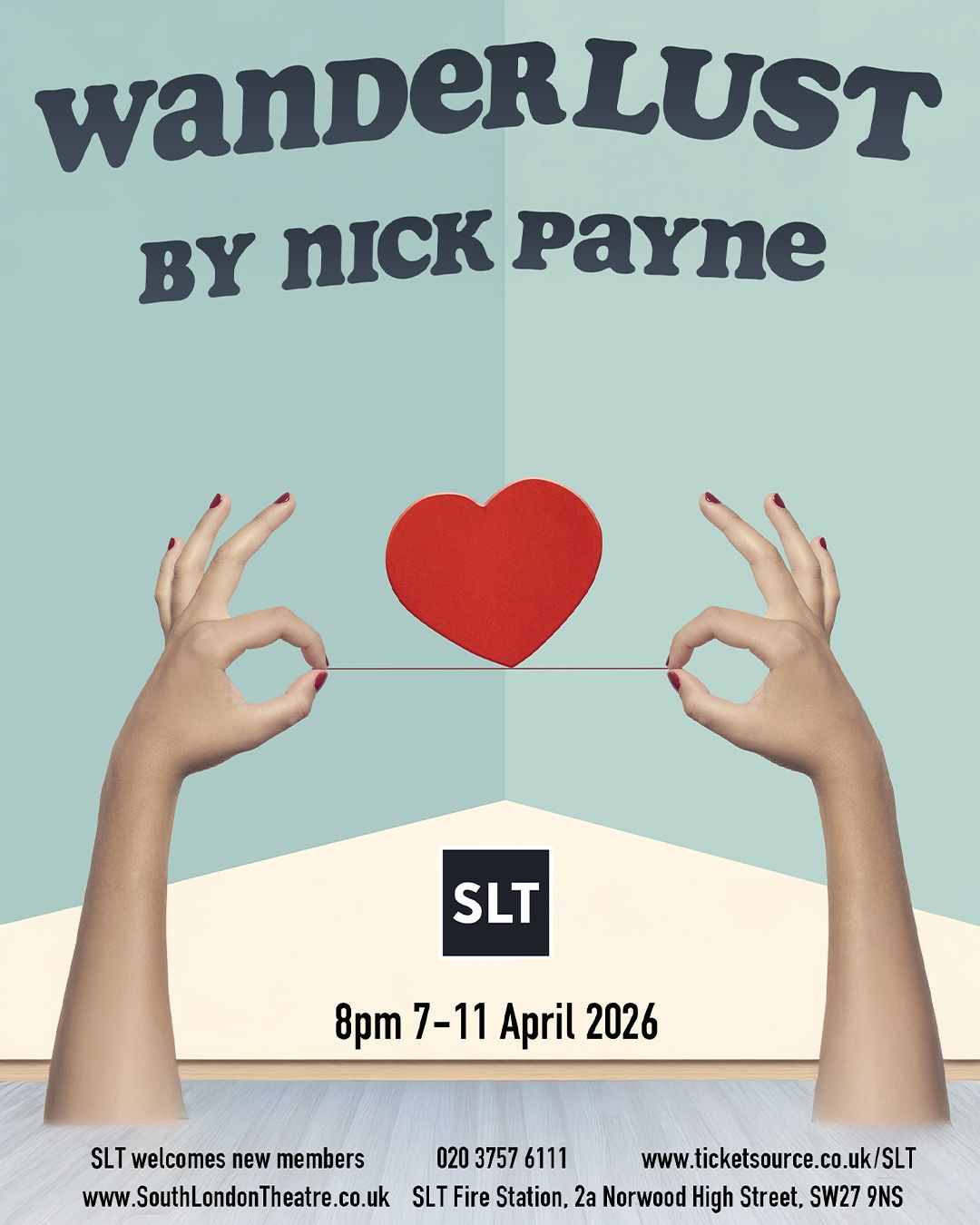
Thanks to Owen for taking the time to chat. Wanderlust will play at South London Theatre from Tuesday 7 to Saturday 11 April. Further information and tickets available via the below link.