Sue Buckmaster discusses Return to the Forest and 30 years of Theatre-Rites
Currently celebrating their thirtieth anniversary year, Theatre-Rites are renowned for their playful and experimental work. It joyfully embraces diversity of performance, culture and heritage in many forms and appeals to children and adults alike. From beginnings in extraordinary site-specific work for young people, they are now an internationally acclaimed company, collaborating with exceptional talent. Indeed, in this landmark year, their newest production, Return to the Forest, sees them reuniting with illustrious South African Choreographer Gregory Maqoma.
We were keen to know more about the show and the company’s journey to this point, so were delighted to have the opportunity to speak with Artistic Director Sue Buckmaster.
Sue, thank you so much for chatting with us today at such a busy time in the creative process. Firstly, can you tell us a little about the genesis of Theatre-Rites?
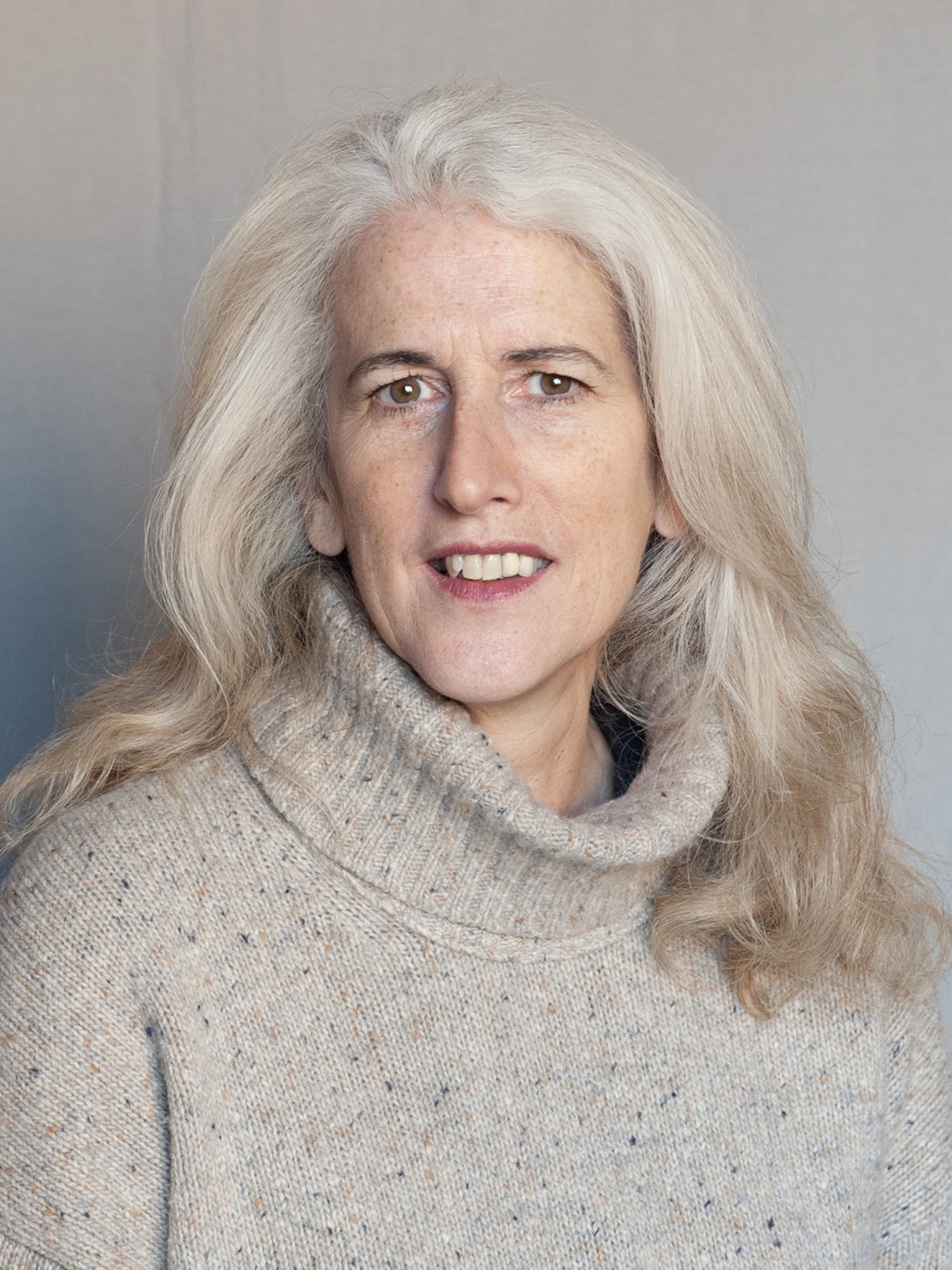
In the early 90’s I met an extraordinary Artist, Penny Bernand, who had already been part of setting up two children’s theatre companies. She was eager to find new ways to make experiences for the young and was dreaming up Theatre-Rites. I was with her from the start as a Puppetry Designer and Co-Director of shows. Our first in 1996, Houseworks, for Out of LIFT, was an installation in a normal house in Brixton for under-fives, which received critical acclaim and put the company on the map. Our second was an immersive show at The Young Vic inspired by a poem, The Lost and Moated Land by Robert Graves. I was hooked. This was exciting, experimental work with interesting artistic challenges, not reliant on existing TV or books, even though it was dedicated to including children in its audience. Sadly Penny died in 2001. It was a great loss to me and the sector, but she had mentored me beautifully. I felt honoured that she blessed me to formally become the new Artistic Director in 2002. We became a National Portfolio Organisation shortly after.
The company’s work is constantly evolving, and from predominantly site-specific works in the early years it feels like at thirty you are now covering extended creative terrain. What changes do you see as having occurred?
For me, and the incredible Artists we collaborate with, it is vital to keep growing and expanding. In theatre, and frequently in children’s theatre, there is a tendency to find a formula which works and make a living from that. However, I believe the Artist’s job is to always be seeking new ways to see and imagine the world and that feels even more essential when it comes to the important young audiences we wish to engage with.
In the late 90s it felt important to bring children into theatre spaces more than just once a year for the pantomime. In some ways we have come full circle! But the cultural and economic environments have changed. There was a lot of interesting Theatre-in-Education shows within schools at the time we set up Theatre-Rites. What we wanted to do was to expose children to the delights of the theatre technical wizardry, especially as projection and lighting was developing at a speed, by enticing them back into the theatre space. We were able to set up 12 week-long touring programmes in the UK and elsewhere. We were granted get-ins and budgets in line with those given to theatre for adults. The audiences were eager to experience the work.
At the same time, there were also some amazing site-specific shows stirring the imaginations of adults – Penny and I said, “Wouldn’t it be great to create one for children?” After the success of Houseworks, the next 15 years were spent making site-specific shows around the world in industrial buildings, cellars, hospitals, corner shops and museums.
So what’s different now?
Site-specific work has now evolved into immersive productions. Due to property and spaces becoming of more economic value, it is now highly unlikely we could install and rehearse in a real space for six weeks.
Also, due to the cost of living and the pressures of a less art-focussed school curriculum, audiences of children and their families and teachers are coming to the theatre less frequently. We seem to have returned to the once-a-year outing to a pantomime or well-known adaptation.
Therefore instead of making ‘site-specific theatre’ we have shifted to address current issues, opportunities and artistic interests. Whilst we used to want to enliven forgotten buildings and the stories they could tell us, it seems now that it is the theatre space which is in danger of being neglected! We want to help encourage a wider audience, including children, to believe that the arts and the theatre spaces are relevant to them. This includes us making huge work for theatres and festivals but also all the engagement activities which surround those productions, as well as performances in schools, libraries and, more recently, for the outdoors.
For me, it is not all about scale. It is about having a decent budget, brilliant collaborators with a diversity of experience, and access to a wide range of audiences. It is about recognising the beautiful eco-system of theatre-making, which is all interdependent.
From our inception, diverse casting has always been a priority, as it is for many companies presenting work that reflects the diversity of its young audience. Over the years we have also had the pleasure of being increasingly able to create work which attracts and is inspired by a creative team which are also diverse: diverse in culture, age, gender and art form. This is at the heart of why I believe the work of Theatre-Rites has been able to keep evolving and reflecting the needs of Artists and the audience, keeping it fresh, vibrant and relevant. Collaboration is the beating heart of Theatre-Rites, and I see my particular job as gently guiding or facilitating the various collaborations to thrive.
Magical visual storytelling, using puppetry and dance in combination, is at the core of much of your work. What can we hope to see of this in Return to the Forest?
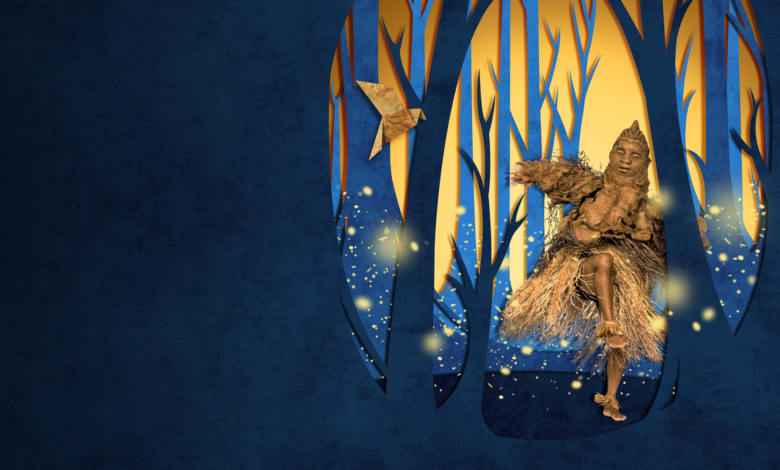
In our latest immersive work Return to the Forest you will see dance and puppetry/mask combined in a way which has been inspired by some of the cutting edge artistic explorations into the relationship between humans and nature, the ancestral wisdom inherent in objects usually seen in museums and our usual immersive style which helps the audience feel part of the experience.
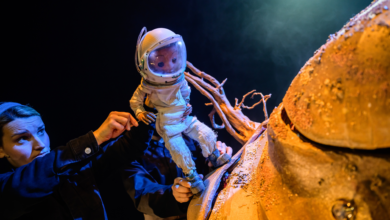
We are animating five precious objects, which start in a museum and, through dance and puppetry, come alive to tell us their stories. This is not a story in words, but a narrative which speaks the visual and physical language of dance and puppetry, suitable for adults and children over eight. You will be transported from a museum space to an enchanted forest, then into the magical world of tangly roots, re-emerging into the joys of a masquerade celebration of all things important – marking the importance of knowing one’s roots, nurturing potential growth and sustaining connections. It’s a wonderful way to celebrate our 30th year.
Theatre-Rites always makes non-adaptive pieces – it’s never just a reimagining of a book, for example. Can you tell us something about the cast and creatives in the production and how you brought them together to devise the work?
Yes, Theatre-Rites is funded by the Arts Council based on our commitment to creating non- adaptation work for children. Making book or TV adaptations still seems to be the go-to when it comes to commissions, venues and audience behaviour, therefore we have to work extra hard to ensure that this more experimental approach is protected. I believe children have the right to see a range of work just like adults. I believe more interesting and diverse artists are keen to make work for children if the brief is less limited and can reflect their own experience of what childhood can look like and the alternate futures we can imagine together.
For Return to the Forest, with the encouragement of Factory International, Manchester and Sadler’s Wells, I decided that we should collaborate once more with Gregory Maqoma. After the huge success of creating Chotto Desh and Chotto Xenos for the Akram Khan Company, the late Emma Gladstone had introduced me to Gregory believing we would inspire each other. She was so right! Our first collaboration was produced during Covid so we both felt there was a lot of unfinished creative business. Luckily others agreed.
Gregory and I then selected our amazing team and conducted two Research and Development weeks (R&Ds)
I am proud to say that the puppets, masks and costumes have been designed by a team of Craftswomen, all dedicated to listening to materials, inspired by their own cultural heritage and with respect to Theatre Green Book policies. Jean Chan is the Designer, Kinnetia Isidiore, the Costume Designer and Alison Duddle and Naomi Oppenheim are making the puppets, masquerade costumes and props with special support from Visual Artist Bunmi Agusto on our inclusion of a Nigerian Gelede-style mask.
Guy Hoare is our Lighting Designer who has collaborated with us before and knows how we love to blur the lines between all the elements. Gregory is joined by the wonderful Assistant Choreographer Miguel Altunaga and our Co- Composers are Frank Moon and Domenico Angarano who, between them, have creatively travelled the world of musical possibilities.
We have three Dancers and two Puppeteer/Movers in the amazing cast.
You’re never afraid of immersing children in intelligent, complex ideas and respectfully offering them agency and inclusion. How will that work for audiences attending Return to the Forest?
Previously Theatre-Rites have created productions exploring neuroscience, economics, death, the refugee experience and coal mining, to name a few. As an Artist I wish to use my art as a way of expanding my own research interests, some of which, on first glance, do not appear very child-friendly. However, all these topics can have a huge impact on children, and we need to give them a chance to ponder on their own developing views. I believe there is a way to present these themes to children which is appropriate, and may I dare say, even more exciting than some of the didactic work created for adults.
Many people think we must sort out our adult opinions before we can present them to children. However, currently adults don’t always have the answer, and I feel it is wise to present food for thought, which can be shared by all ages. I remember for Bank On It, our site-specific show for the Barbican, the adults who came with their children arrived feeling angry in the light of the recent economic crisis. They left the show feeling moved and inspired by the way the children engaged with thoughts around shared resources. The Welcoming Party, for Manchester International Festival, inspired wonderful conversations around how we should consider what home looks like and how we can provide safety for each other. Experiencing theatre with adults and children is really very special.
In Return to the Forest we are being inspired by the artistic discussions adults are having about post-colonial ownership of museum objects and the place of ancestral wisdom in light of climate change and an ever-increasing digital age. Without being too didactic, Theatre-Rites, using a more abstract and symbolic visual language, wishes to make this show an imaginative opportunity for the young and old to consider these subjects in a way appropriate to them.
Return to the Forest is being launched at Factory International in Manchester before going on to Sadler’s Wells East, a destination venue for leading edge dance and work for younger audiences. This could be the pinnacle of any company’s career: how do you feel about the achievement and what path do you see going forward?
It is indeed very exciting and an honour to be asked to make an immersive, experimental piece of dance/puppetry co-produced with Factory International and co-commissioned by Sadler’s Wells. It is also exciting to announce that we are taking the show to Blackpool in a non-immersive form.
It is an interesting concept to think about what is the pinnacle of a career. For many, particularly women in the arts, the pinnacle is when you can get your life work balance right – when all your artistic decisions truly combine with your life decisions. I feel very lucky that I have managed to raise two daughters, be true to my artistic desires, collaborate with brilliant artists and producers, be part of a beautiful core team, make socially relevant work, be full time employed as an Artist with an invisible disability and to have worked in arenas ranging from shopping centres to the Vienna Opera. I couldn’t choose one pinnacle. They are all glorious parts of being able to practice as an Artist and as a woman. And indeed, even though Theatre-Rites is 30 and I now see myself as a valuable Elder in the arts sector, I am still practicing!
It would be good to say that the job is done. I know Theatre-Rites has paved the way for many Artists working in the areas of puppetry, dance and objects, children’s performance and site-specific/immersive work. As part of our mission we have always prioritised offering mentoring, training and nurturing. Unfortunately, there is still much to be done to protect the rights of Artists to make experimental art for children and for the children to get the opportunity to experience it. Therefore Theatre-Rites will continue to evolve and support with passion those who share our mission.
Thanks very much to Sue for giving us this amazing insight into the work of an exceptional company.
Return to the Forest is aimed at ages 8+ and plays as an immersive performance at Factory International in Manchester from Thursday 7 to Sunday 10 May before visiting Sadler’s Wells East from Thursday 28 to Saturday 30 May.
A non-immersive version will then be performed at Blackpool Grand from Thursday 25 to Saturday 27 June.