This revival of David Hare’s The Vertical Hour brings its conflict to life through great performances, but time has dulled the impact of a work rooted in a very precise period of recent history.Rating
Good!
A son introduces his father to his new girlfriend over the course of a weekend at his house in Shropshire, which exposes long-term tensions in their relationship. This could be the plot of a kitchen sink drama, but add in that the new girlfriend is a veteran war correspondent and political academic who has grown cynical about how comfortable liberal life is in the West, then events take on a political dimension.
In The Vertical Hour, relationship tensions manifest as political arguments, and political arguments create relationship tensions. The debates are specifically focused on the Iraq War. Nadia, the new girlfriend, supports the invasion after seeing the genocide in Bosnia. The father, Oliver, opposes it, invoking the high-minded “peace and love” morality of the 1960s.
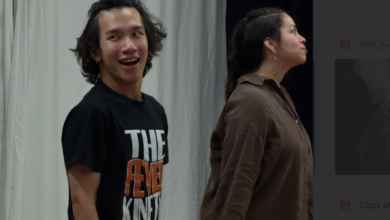
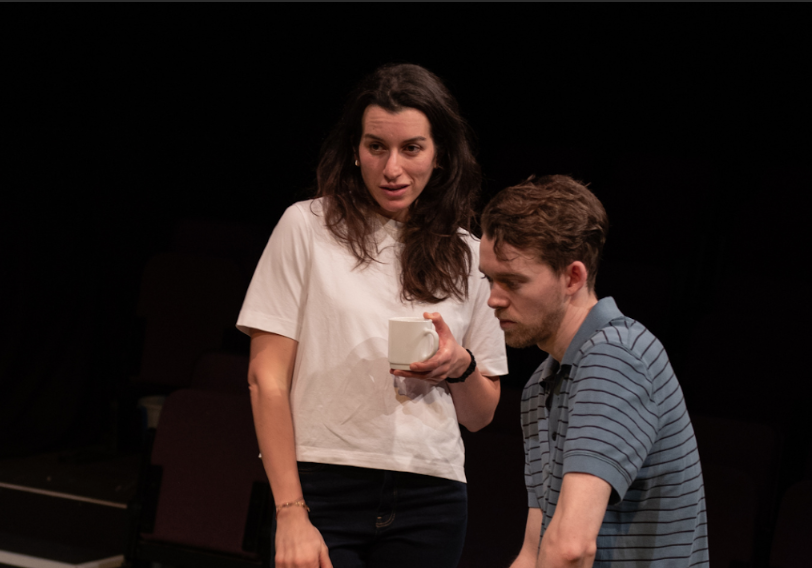
These conflicts are tense in this revival production at The Questors Theatre. David Hare’s script is relatable, and the emotional stakes are high, without the need for an undercurrent of violence or shouting matches to create tension. The performances are strong, especially Dina Fahmy as Nadia and Paul James as Oliver, who give their characters real human warmth and make them more than political archetypes.
The play’s political commentary is dated. David Hare is a great political writer, but time has faded the impact of the dialogue. Accusations of the British not being patriotic do not land in an age where the England flag is ubiquitous. Arguments that America should use its military might for the good of oppressed people everywhere are hollow when Joe Biden allowed a genocide to take place in Gaza. Invoking America’s moral mission is a joke when Donald Trump is president.
This leads me to question why stage this play, so rooted in a previous era, now? What does it have to say that is relevant? Is it that the origins of current politics lie in the failures of the past? This play has little to say about how the failure of interventionist regimes created the current age of cynicism.
The debates at the core of this play are too recent to use history as a mirror for the present. The script also does not have enough timeless points to make about war, as, for example, Bertolt Brecht’s Mother Courage and Her Children does. This play must have been searing when it opened in 2006, but its impact has faded over time.
None of this is the fault of the cast and crew at The Questors Theatre, who work well with the material. The minimalist staging gives the character drama space to fill the stage. A spotlight is used effectively to signal when characters are reflecting. Projections behind the stage neatly establish the location, and a montage of images of female war correspondents, from Lee Miller to Marie Colvin, invokes the wars that are present in the drama but physically distant from Shropshire.
The drama of this production is dated and, inevitably, a lot of its impact is lost. This production does not find a timeless message or historical precedent for our current age and leaves the show firmly rooted in the time when it was written. However, it does work well with a script that is very specific.
Director: Paul Collins
Writer: David Hare
Lighting Designer: Andrew Whadcoat
Sound Designer: Jane Arnold-Forster
Costume Designer: Jenny Webb
Set Designer: Stephen Souchon
The Vertical Hour plays at The Questors Theatre until Saturday 21 February