A compelling and thought provoking examination of human morality, sparked by an SS officer’s photo album of AuschwitzRating
Unmissable!
A Holocaust archivist receives an album of photos that appears to show a side of life at the concentration camp Auschwitz never seen before. It holds pictures of smiling leaders and workers at the death camp, flirting, sunbathing, eating blueberries. Is this a story that should be told? Or would doing so dishonour their victims? This is the dilemma at the heart of this powerful and compelling play. But it goes much further than that. By digging into the lives of the people who feature in the album, examining where they came from and what happened to them, it explores the moral questions around complacency — being a bystander or bit-part player in the monstrous depravity of the Holocaust.
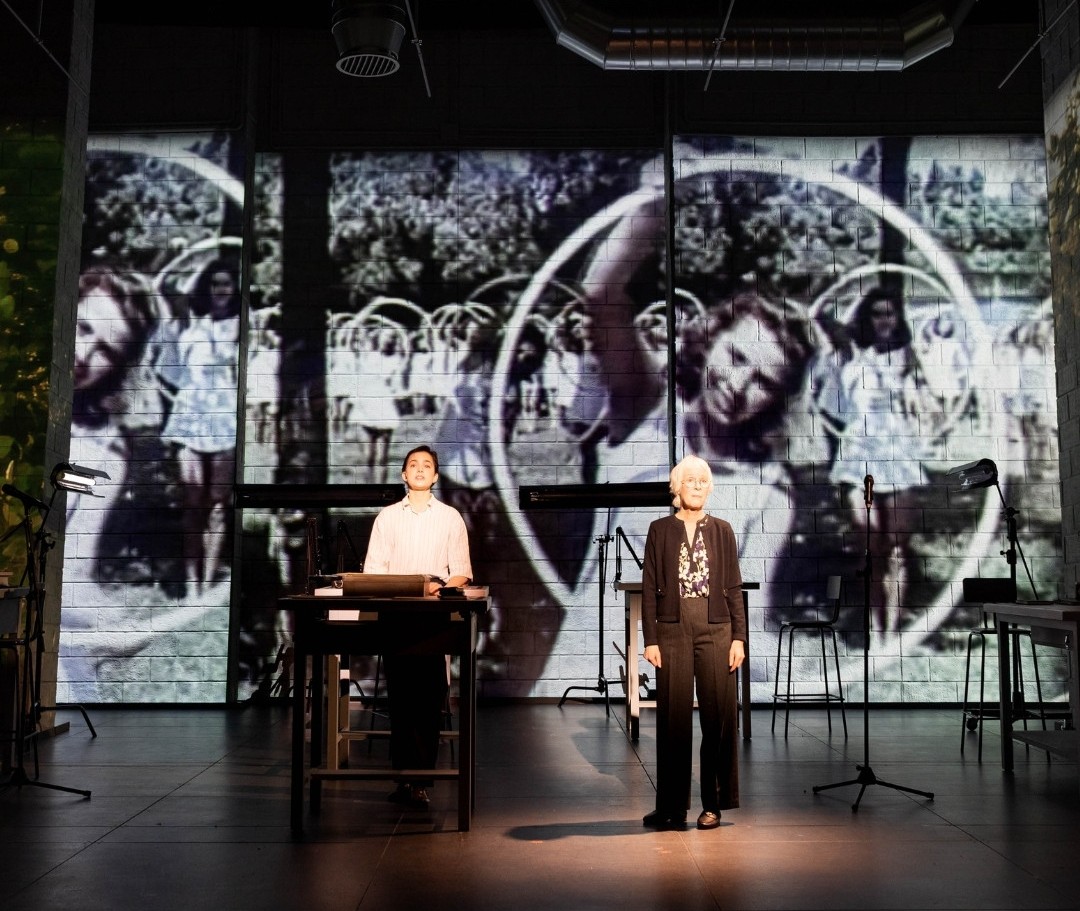
We meet three main sets of characters — the archivists, led by Rebecca Erbelding (Philippine Velge), the people who feature in the photos, and their relatives. Often it is the people in the photos who take centre stage — their faces filling the back of the theatre, spilling across the proscenium arch, and repeated in smaller panels across the stage. Video is used to highlight individuals in the crowd shots or isolate them as they stand proudly in a group shot. We follow the archivists as they try to name the Nazis and find out what happened to them. Velge brilliantly conveys the nervous energy of the archivist, the horrified excitement of her discoveries and her mission to uncover the truths that will hopefully bring about some much delayed justice.
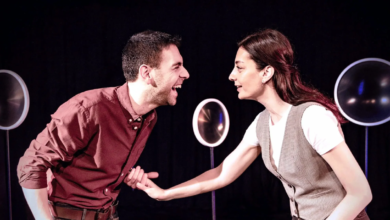
This may sound heavy going, and it is a powerful and moving play, but it is also dry eyed and clear headed. It is a play about the wider moral questions surrounding genocide, not individual cruelties. This necessary distance is emphasised by the excellent stage design (Derek McLane) and projection design (David Bengali). Most of it is set on a plain stage with muted lighting and people standing at desks examining documents. Throughout the performance, these desks are moved around to allow the performers to gather among them, with a multitude of images projected onto the open desk lids. There are old fashioned microphones on stands, which the actors use to create sound effects, bringing the photos to life.
This is a compelling play — part lecture, part verbatim testimony and part detective story. It doesn’t so much tug at the heartstrings as leave us ashamed and confounded as to how we can divorce our own circumstances from those of our neighbours and wilfully disown our decisions. It makes us consider how our personal legacies will be viewed in years to come — what footprint our social media streams, our liking and sharing of information, will leave, and how this will be viewed by future generations through the lens of hindsight. The play sounds a clear warning — still relevant eighty years on — that truly terrible things can happen if we put personal comfort ahead of the greater good.
See this play. You will leave angered, saddened, but, most of all, changed. It will challenge you to question your own actions — which is possibly the best defence there is against any potential repeat of the horrors of the Holocaust.
Written by Moises Kaufman and Amanda Grinch
Directed by Moises Kaufman
Dramturg: Amy Marie Seidel
Scenic Designer: Derek McLane
Costume Designer: Dede Ayite
Sound Designer: David Lander
Here There Are Blueberries plays at Stratford East until Saturday 07 March