In Conversation with Ivanka Polchenko
At Everything Theatre, we are always drawn to stories that tackle the complexities of the human condition with “raw honesty.” When we first encountered The Sound of Absence, we were struck by its ambitious fusion of live piano and intimate storytelling (you can read our full review here). Now, as the production prepares to return to the stage at the Omnibus Theatre from 24 – 28 February, we sat down with Director and Dramaturg Ivanka Polchenko to discuss the delicate art of staging grief.
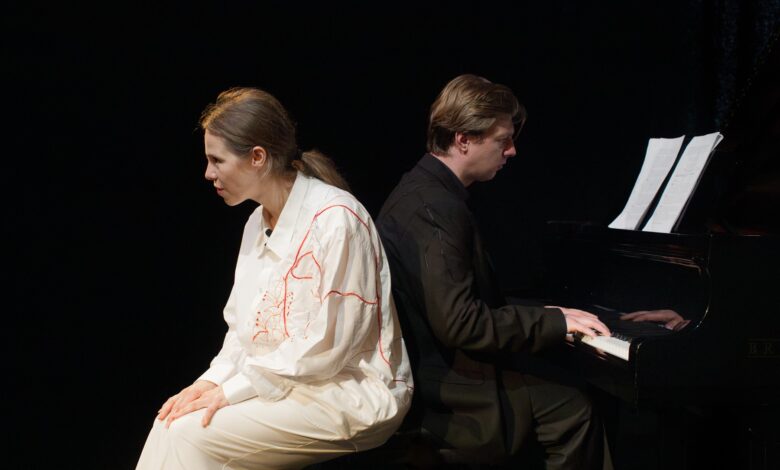
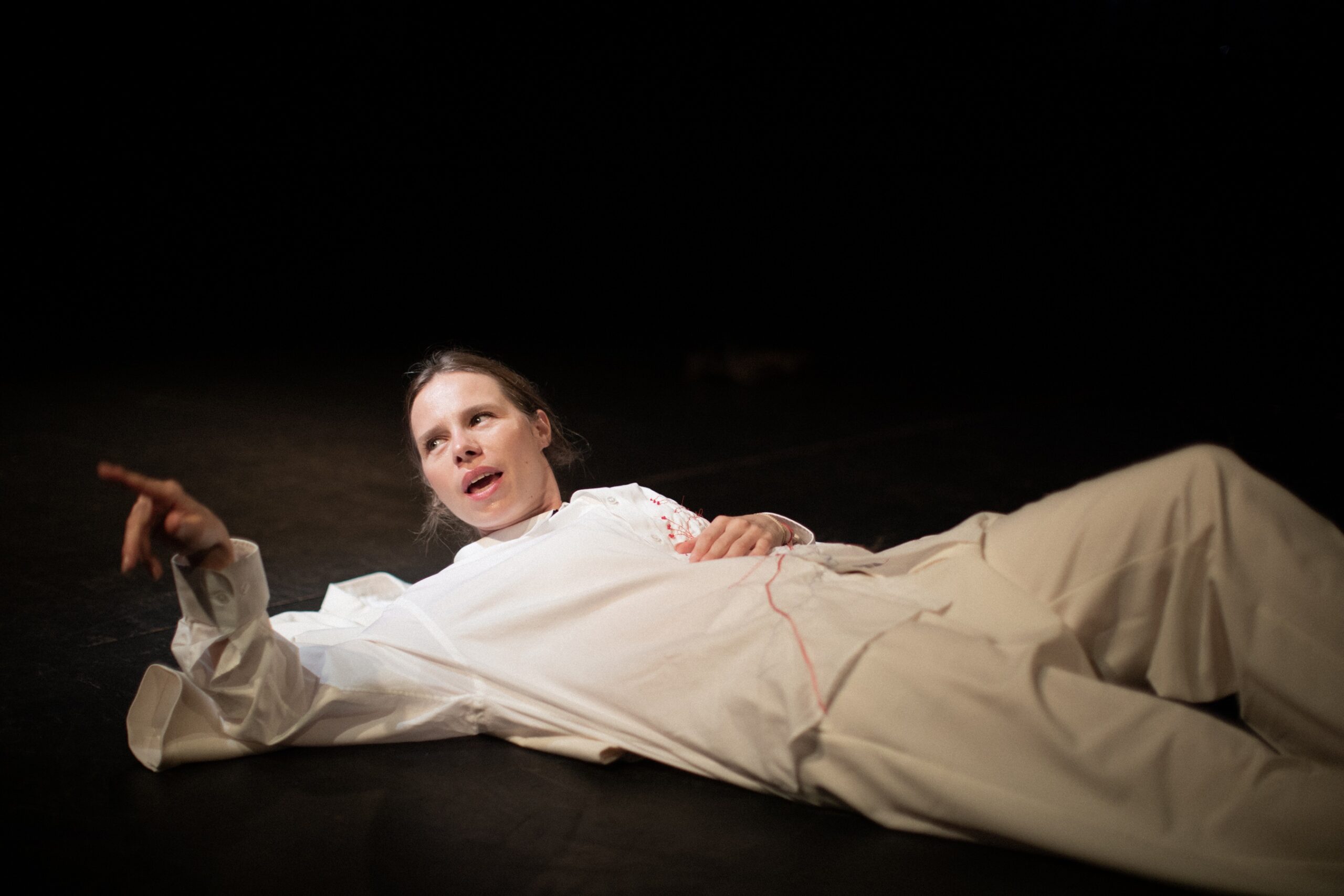
Written by and starring Yanina Hope, the play is a deeply personal exploration of the father-daughter bond, sparked by the sudden loss of Hope’s own father. It follows Lenore, a woman who arrives at her father’s bedside too late, only to find that his death becomes the unexpected catalyst for her own self-discovery.
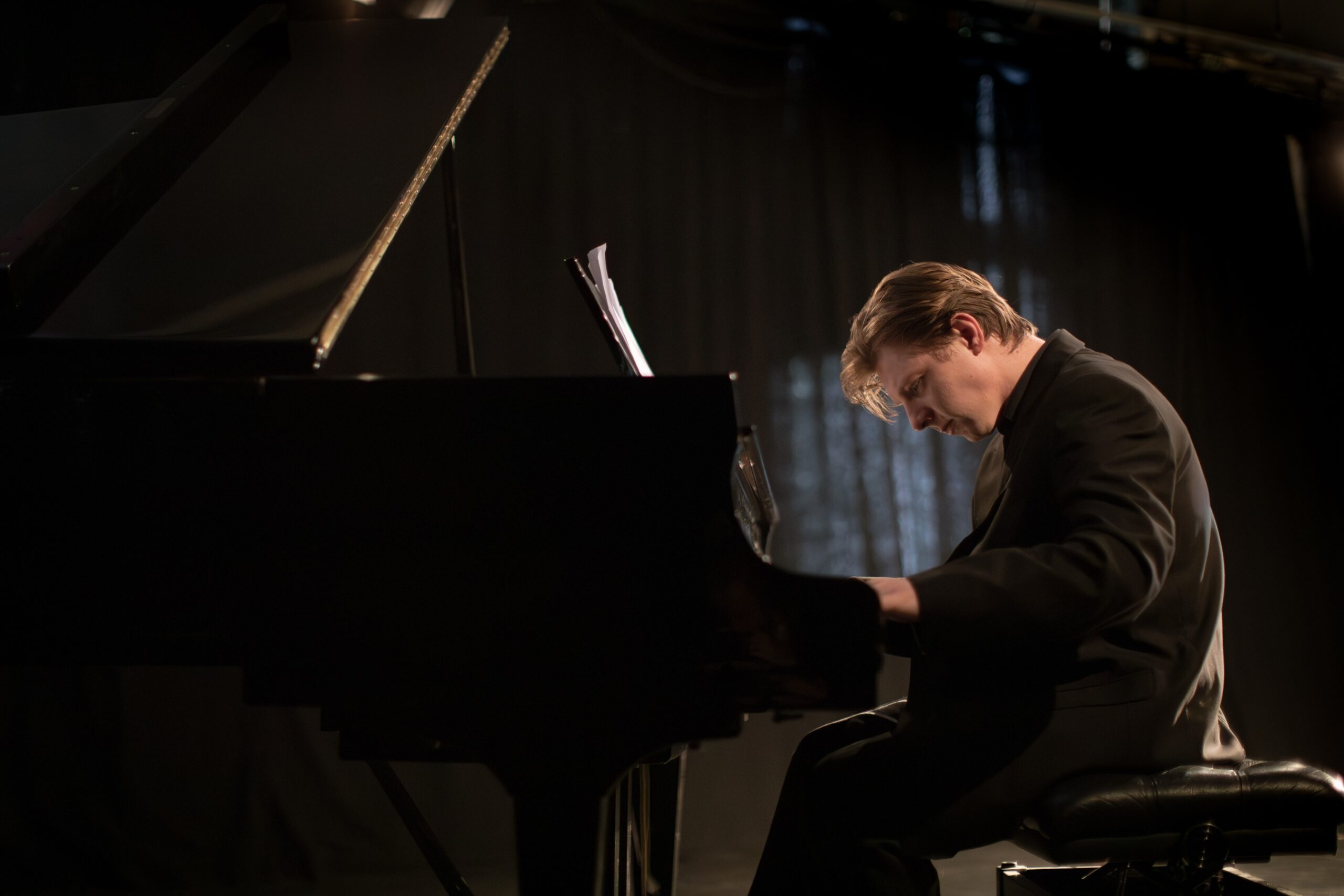
With a creative team that spans the globe – from the physical theatre traditions of Paris and London to the haunting compositions of Ukrainian pianist Vladyslav Kuznetsov – Polchenko is tasked with turning a private journey of “rage and renewal” into a universal theatrical experience. We spoke to her about the “emotional architecture” of the show, the power of live music, and how we find a more honest relationship with ourselves in the wake of loss.
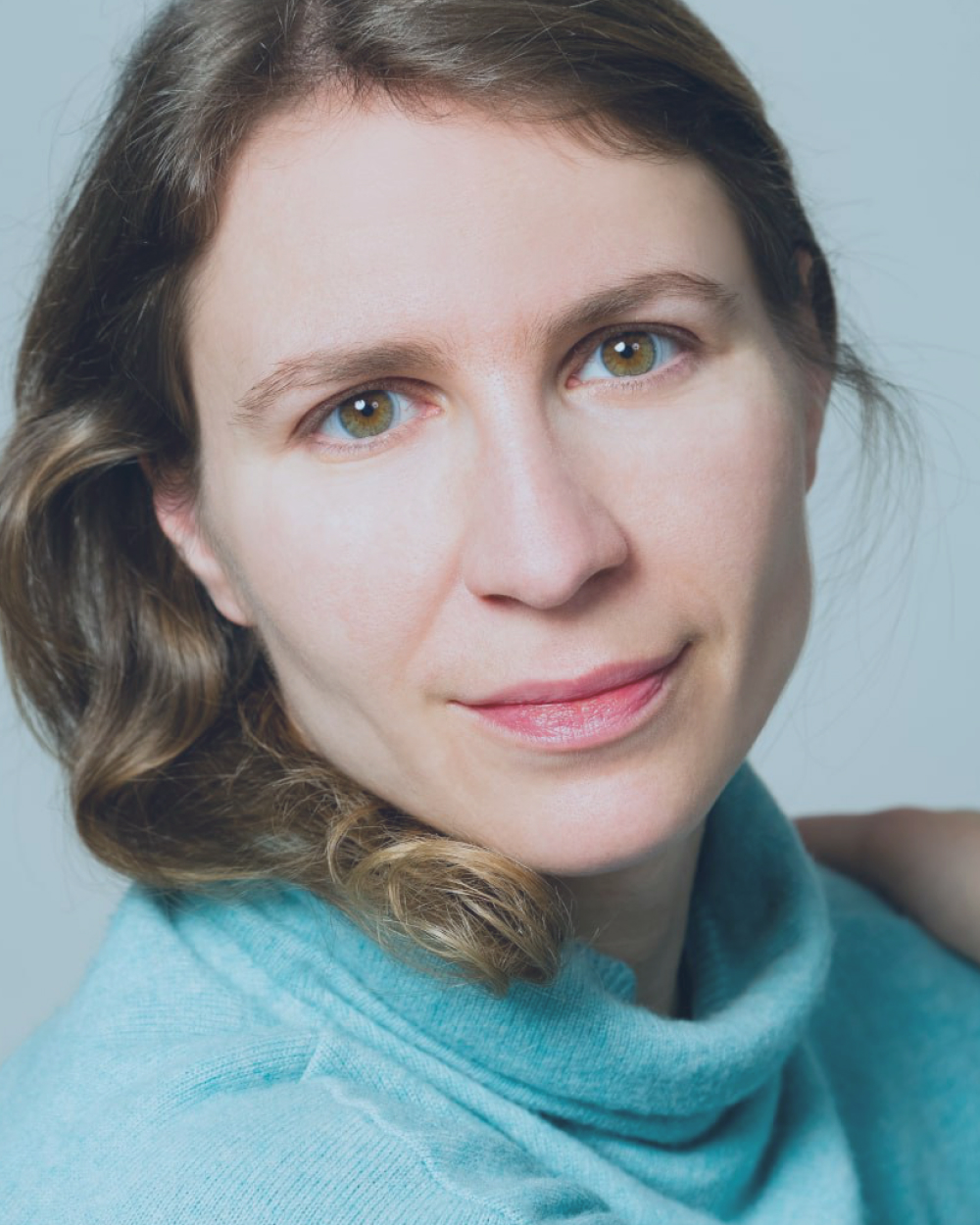
You’ve worked with legendary physical theatre practitioners like Simon McBurney and Yoshi Oida. How have those influences shaped the physical language of The Sound of Absence?
Simon McBurney has this incredible gift of working with the space as a malleable matter. He conceives stage in movement, shapes it through forms as if it were a body, thus revealing its dynamics. Yoshi Oida comes from the Japanese theatre tradition where extreme rigour leads to inner freedom. What I retain from his teaching is the idea that an actor can command form and space from within. In him, you can see something that radiates from the body and fills the space.
Ultimately, for me the two approaches serve the same goal: how to render stage action in its globality. And that’s what we tried to do with the components of The Sound of Absence – looking at text as action, seeing music as language and space as a moving form. The result is to be judged in the theatre.
The press release describes the show as an “ambitious fusion.” As a director, how do you balance the power of Vladyslav Kuznetsov’s live piano with Yanina’s spoken performance so they complement rather than compete with one another?
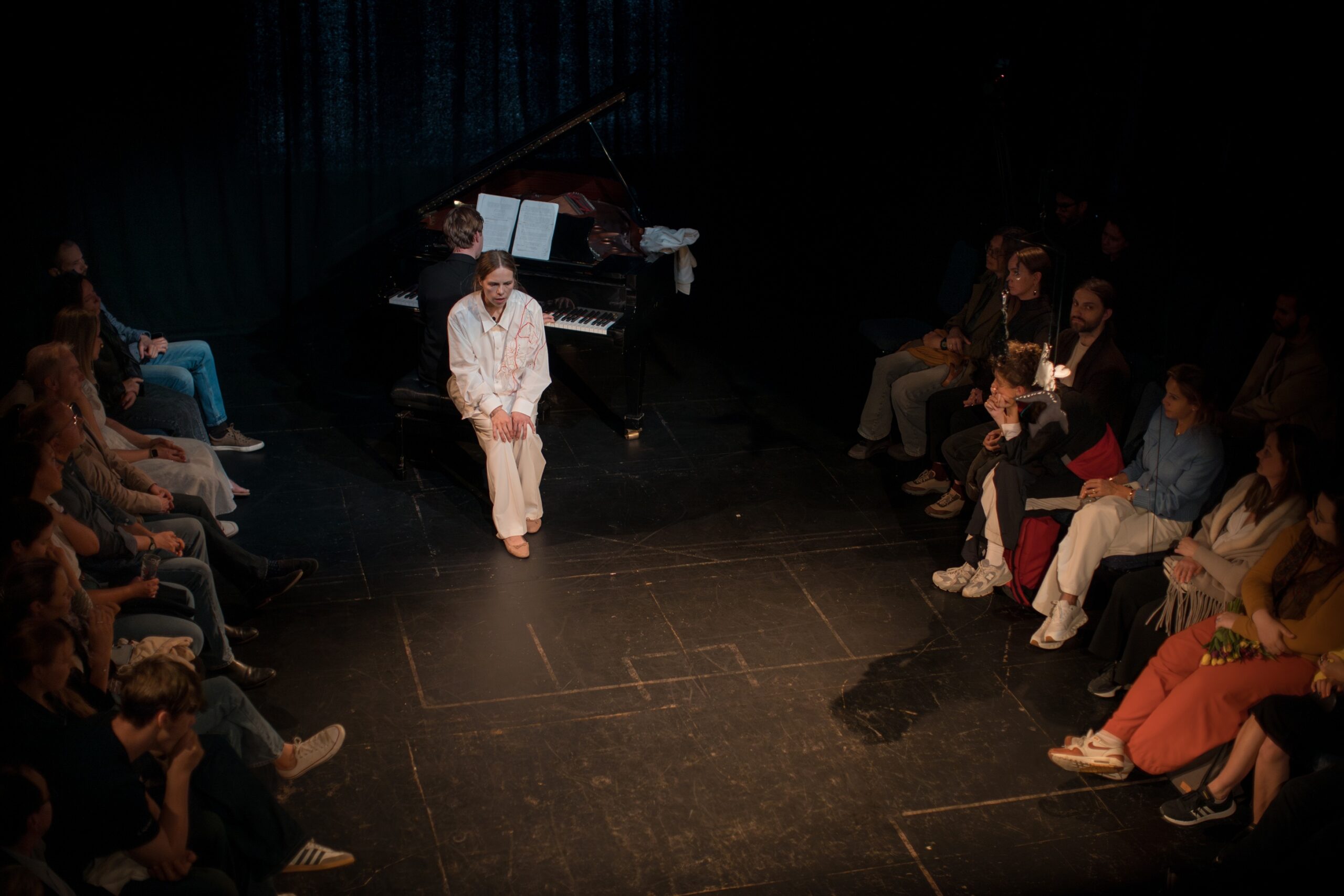
Oh, the sound balance is of course very important (laughs). Yanina has a mike, because the grand piano can be overpowering. And that’s the beauty of it, isn’t it?
But you are right, complementarity is the word. From the very beginning, the idea was to respect each medium and intertwine two parallel stories together. We knew that each had to give in, in order to build the dialogue between the music and the voice. The most important decision was accepting that neither story is complete, that we had to accept gaps and slip-offs, pauses and silences on each side. And let them complement each other, although they might seem totally opposite at times.
Maybe the “ambition” is our desire not to choose one above the other, nor give the audience clear cues of how to interpret the whole. It’s an invitation to let yourself go, to embark on a journey that is not to be rationalised but deeply experienced.
It’s not an easy task and demands a different quality of listening, an attention which makes every show unique. Vladyslav is an amazing musician capable of picking up the nuances in Yanina’s acting while carrying on with the score. And Yanina has this extraordinary challenge, that she deals with brilliantly every night, to absorb all aspects of the show – text, movement, music, light – and blend them into being every second of stage time.
The play deals with “the relationship they didn’t have”. How do you direct “absence” and make a lack of connection feel tangible and dramatic on stage?
What we worked a lot on was understanding where the character’s energy drive originates. Where is her breaking point, the traumatic event that triggers action? Absence is just one part of the relationship, its complimentary part being presence. The tension arises when we reject the former and call for the latter. In that sense, Yanina’s text had some great devising ideas that we tried to take further through acting and stage symbolism.
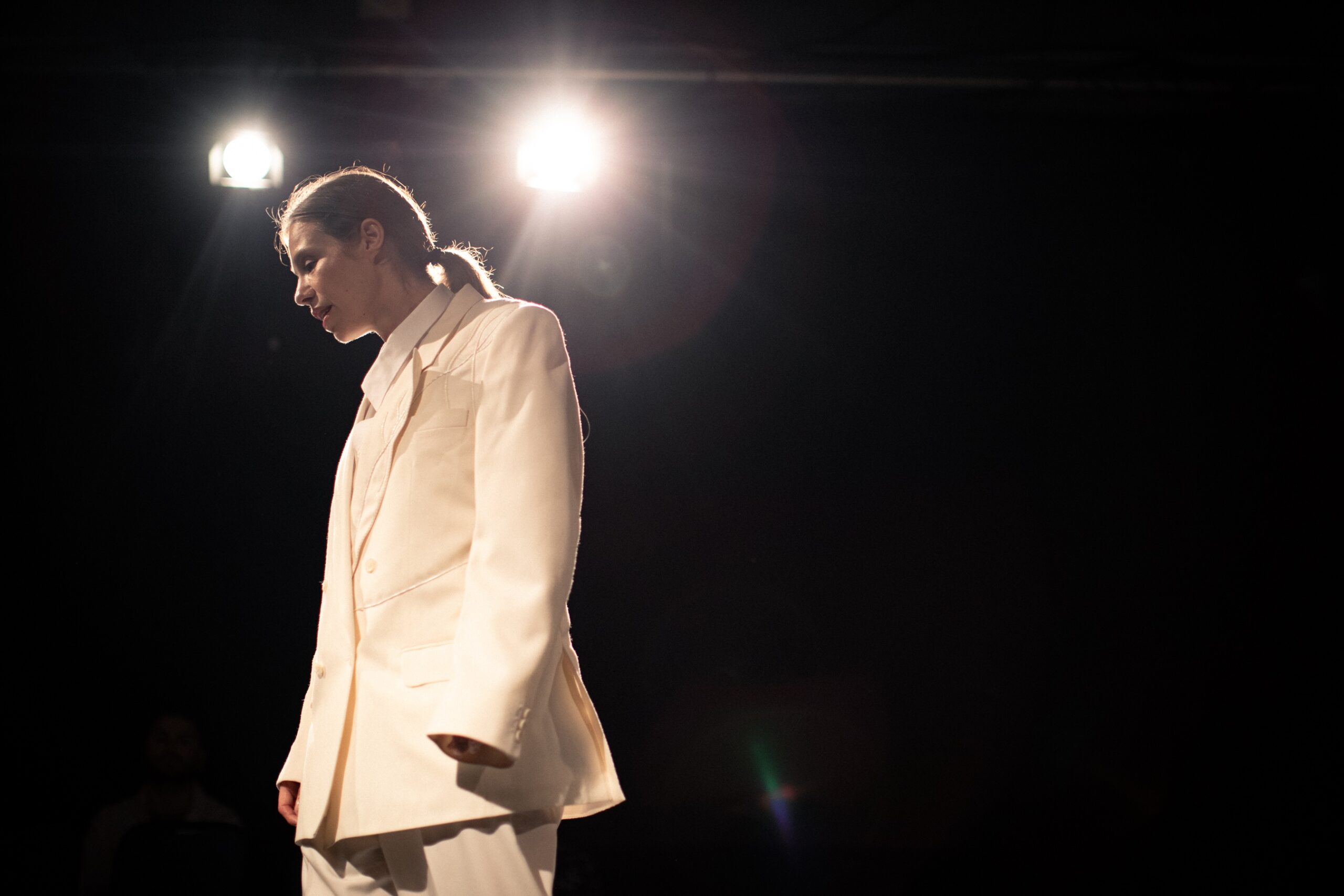
The music then carries a major part of the emotional weight, supported by the work with lights (lighting designer thegeorgeNet) and body and space. It is this dynamic of action versus state that became the expression of absence and lack at the core of the story.
With a cast of only two; one performer and a pianist, how do you use the space at the Omnibus Theatre to create the sense of a world that spans hundreds of miles and many years of history?
The journey is an imaginary one. We are invited to follow the evolution of the protagonist and the gaps she has to fill to collect her (new) self, following the loss of her father. She starts piecing up her own story from two opposite narratives that coexist internally, as it often happens when we experience a shock. The distance Lenore has to overcome – of time, or space, memory or psychological one – becomes real because we all had to go through the loss of someone dear in our lives. For me, theatre is ephemeral by definition, its great strength is its capacity to stimulate our imagination. The Sound of Absence gave us a great opportunity to put it into practice.
What was the most challenging part of taking Yanina’s deeply personal, autobiographical writing and shaping it into a universal theatrical narrative?
Yanina was very generous and incredibly courageous in sharing her story with me – and with the audience. Her script also has some brilliant intuitions – use of poetry and dramatic change of levels. Still, between her reality behind the text and my understanding of the story, there is an inevitable gap, I’m well aware of it. And in the process of creating the show, I was gradually drawing her away from her personal story – towards the theatre truth. It’s a necessary step. This changeling makes true life events ever more veracious. And the liberty taken gives them new life on stage. But of course, I felt the responsibility towards the material and towards the author and balancing that was the most challenging part of the job. I must ask her how she feels about it!
Your previous production, Vanya is Alive, received significant critical acclaim. Did that experience influence your approach to The Sound of Absence, or do you see this as a complete departure in terms of style?
I don’t ask myself such questions. Vanya Is Alive offered us an incredible journey and we are grateful for the amazing reception it had; it surely gives you some confidence. But you can never repeat what you’ve done once. Each story commands its own form and style, we are just there to let it be told. I would say trust your gut feeling and work hard to stick to it.
Besides, you are never alone in this task – every member of the team contributes to the creative process. Some essential elements of the show were inspired by the suggestions from our designer Shahaf Beer, movement director Anna Korzik and, of course, Yanina and Vladyslav.
You have to be there, take everything in and allow this multiplicity breathe on stage. In the end, each person in the audience has to connect their own story to the one we are offering, and it will create a completely new and unique experience.
What is the most rewarding aspect of directing a piece that deals so rawly with grief? Do you view your role more as a storyteller, or as a guide through a shared emotional experience for the audience?
Aren’t the storyteller and the guide the same thing, essentially? I guess our job is to convey the message as faithfully as we can. Which – never forget – is filtered by who we are and how we see the world.
The great Italian director Giorgio Strehler, whom I admire a lot, has, amongst his writings, a very passionate passage describing that the fundamental drive behind his work as a director is telling stories, non-stop, one after the other, no matter to whom and whether people are listening or not. It really puzzled me at first, but now I feel I’m getting close to it. Theatre is the art to be shared, and those moments of communion are the most cherished for both the artists and the audience. With every project and every night the show is on, the hope to live such moments is renewed. This is the miracle and the mystery of the theatre.
Thanks to Ivanka for taking time out of rehearsals to chat with us. The Sound of Absence plays at Omnibus Theatre from Tuesday 24 – Saturday 28 February.