


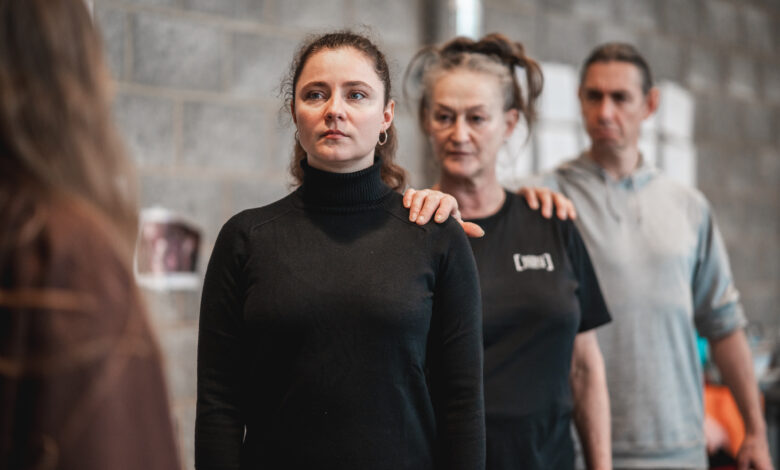
Award-winning playwright Olga Braga takes us to the Donbas and beyond
The dreadful struggle in Ukraine persists, day on day, with no obvious end in sight. It’s therefore important to keep the stories of those living through it in the public eye, and playwright Olga Braga intends to do exactly that, with her play Donbas coming to Theatre503 very soon. But is this more than just another war story about the conflict? We wanted to find out more about where this production plans to take us, so called up Olga to ask.
Olga, firstly, thanks very much for taking time to tell us about Donbas. Can you give us a brief overview of what it is about?
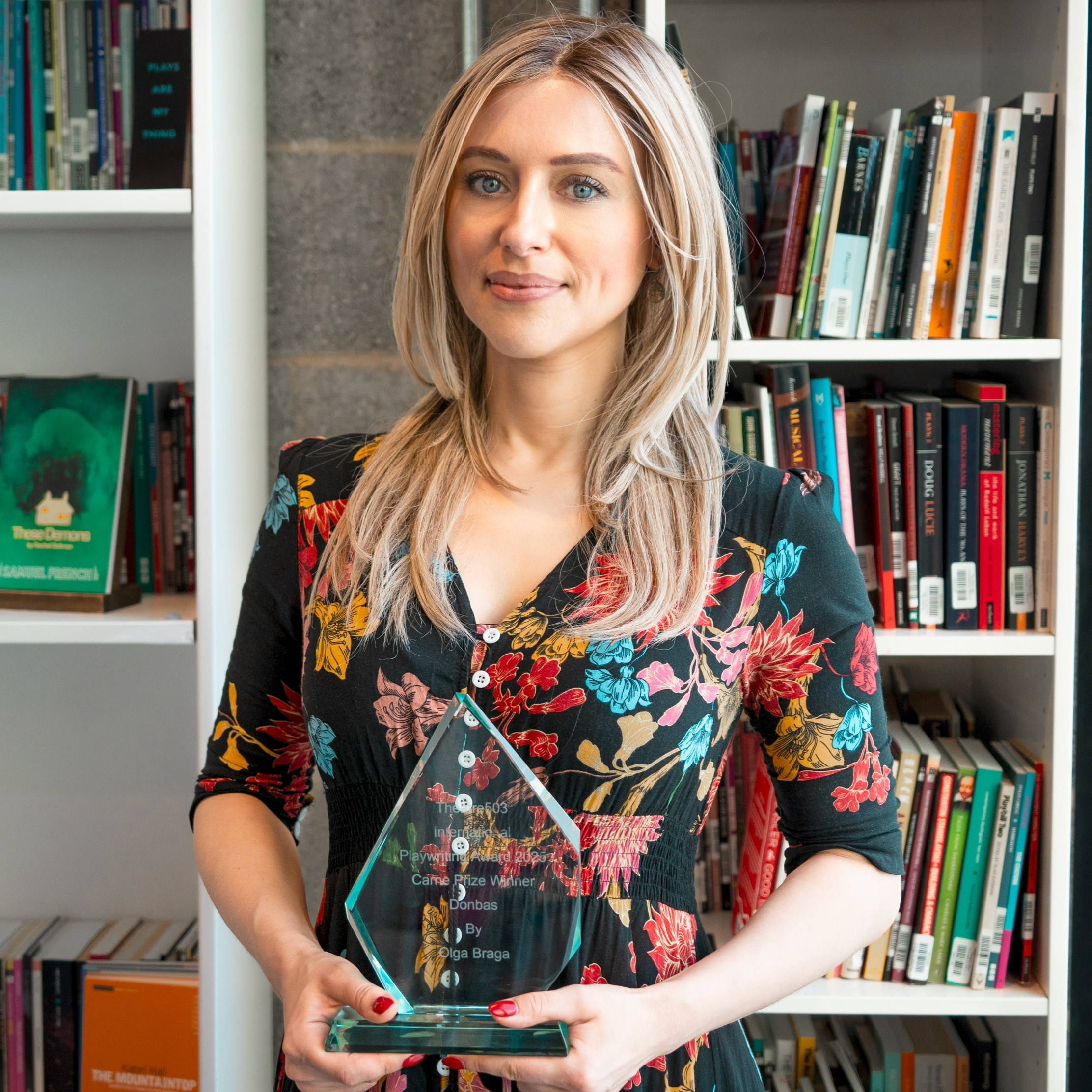
Thank you – I’m grateful you’re asking about the play.
Donbas is set in a small town near the frontline as the full-scale invasion begins. At its centre is a Ukrainian family on the edge of fracture: a father trying to stop his son from enlisting, a partner longing to leave but bound by love and circumstance, a neighbour already grieving what the war has taken, and a teenage girl who becomes the play’s conscience – witness, storyteller, keeper of myth.
But the world of the play isn’t only disaster. It’s also dumplings, lipstick, hair dye, a Snickers shared on the walk home – the ordinary details that become lifelines. Donbas is about war, yes, but also about the stubborn persistence of everyday life inside it. And it’s about the stories we reach for when reality becomes too much – not to escape, but to endure and overcome.
The name of the play focuses us geographically right in the horrific war zone, but there are moments of humour. How does laughter fit within such a serious location?
Humour isn’t a distraction from the horror. It’s one of the ways people survive it. In situations of extreme fear, ordinary life doesn’t stop. People still flirt, argue, tease each other, obsess over the perfect shade of blonde. Laughter becomes a kind of breath.
In Donbas, moments of levity sit right beside moments of grief, because that’s how reality works: tenderness and brutality share the same room. The play is honest about the way imagination can protect you, but also mislead you. Sometimes humour is a shield, sometimes it’s a release – but it’s always human. Even in the darkest circumstances, people find ways to keep living.
There’s an amazing cast and crew from a range of countries and backgrounds. Was it important to you to have good representation in the mix?
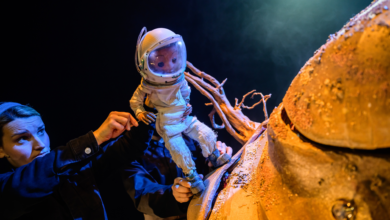
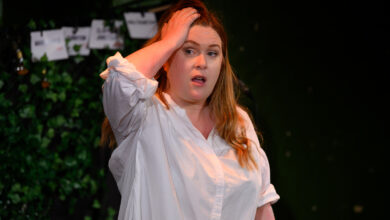
Yes, it mattered to our team that the rehearsal room reflected the reality of the story, because war is never lived by one type of person. Our company includes Ukrainian artists alongside British and international collaborators, and that mix brings different instincts, histories and ways of speaking into the work. One of the most moving parts of rehearsal has been watching the play become shared – it stops belonging only to the writer and starts belonging to the room. That collaboration deepens the storytelling and keeps the conflict from becoming abstract. It stays human: bodies, families, humour, memory, daily life. And that’s what theatre can do best – bring people together to listen closely.
You have personal ties to Ukraine and you’ve lived there, but you’re now writing from some distance. How did that shape the play?
My relationship to this story is shaped by both proximity and distance. I don’t live in Ukraine now, but half my family is still there, and the other half is in Moldova. That creates a strange dual perspective: you’re outside, but you’re never really outside. Writing is my way of staying close to people living through war without reducing them to soundbites. It’s an attempt to keep looking, and to keep listening.
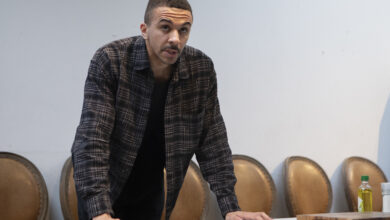
Anthony Simpson-Pike, Artistic Director of Theatre503, is directing for you. How’s it been working with him?
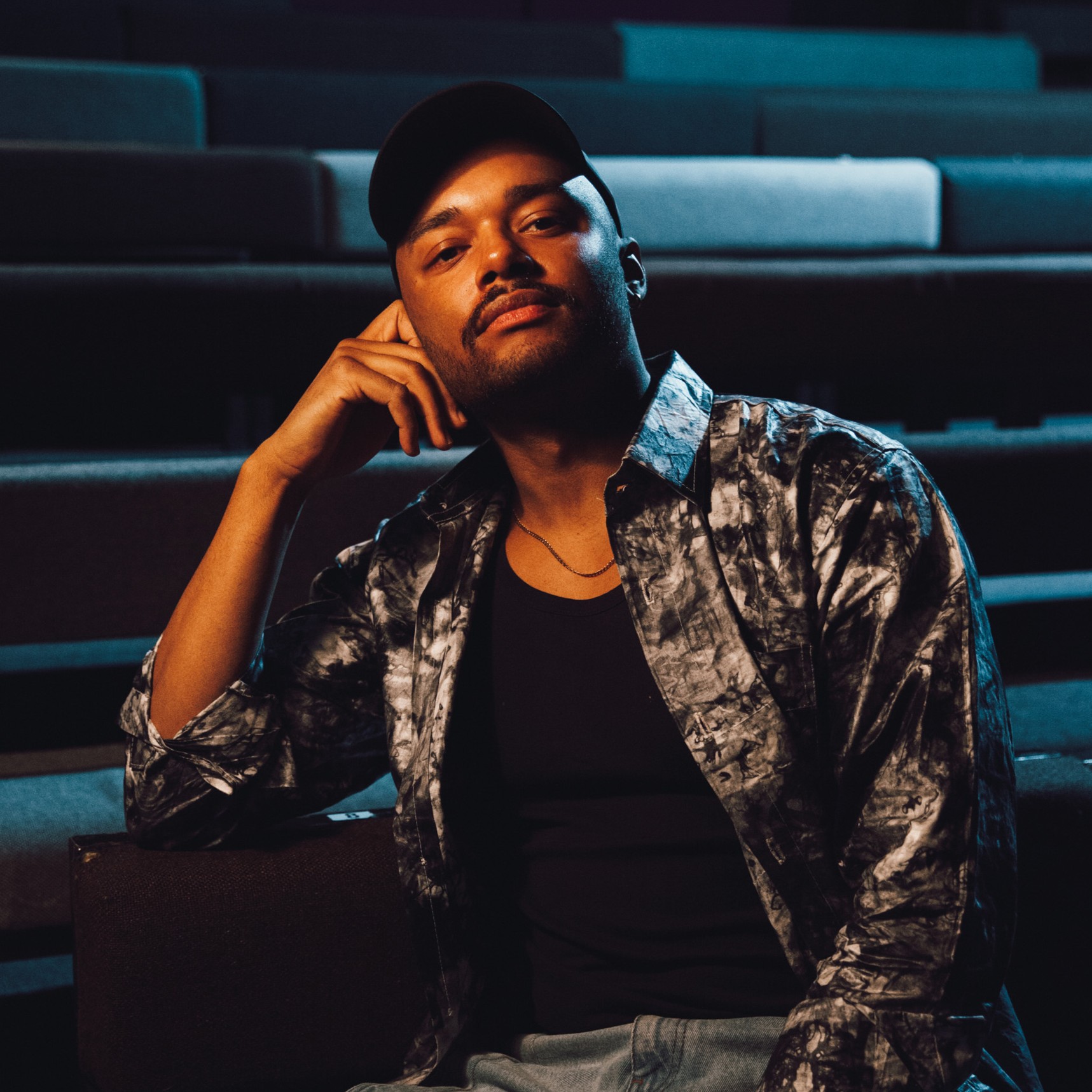
Photo credit: Adïam Yemane
It’s been a real gift. Anthony and I feel really aligned on taste and substance – what the play is, and what it isn’t. He has a great sensitivity to the world of Donbas, and he runs a rehearsal room that’s both rigorous and deeply human. I’ve learned so much from watching how he works with actors – he’s precise about rhythm and truthful behaviour, but he also protects the play’s tenderness. For a writer, it’s exhilarating to see something private become shared and sharpened by other people’s intelligence. I’d work with Anthony again in a heartbeat – I’d say yes before he even finished the sentence. I really hope this is the beginning of a long collaboration.
The play has been produced in collaboration with Theatre503, Good Chance and 45North Production in association with Seventh Productions. What do they each bring to the mix?
It’s been incredibly moving to feel so many organisations rally around new writing, especially at a moment when staging new work is hard and expensive. Theatre503 has been a home for the play from the beginning – a theatre that genuinely champions emerging voices and takes craft seriously. Good Chance brings a commitment to stories shaped by displacement and community, and their involvement feels deeply aligned with the play’s themes of survival and humanity. 45North and Seventh Productions bring producing care, ambition, and the belief that this story can reach audiences now – especially for a production where six actors double and carry multiple worlds. Theatre is never made alone. Having this network of support has turned what began as solitary writing into something communal and alive. That kind of togetherness is what theatre does best – different people in one room, making the same story.
And finally, what will the audience be talking about when they leave the theatre?
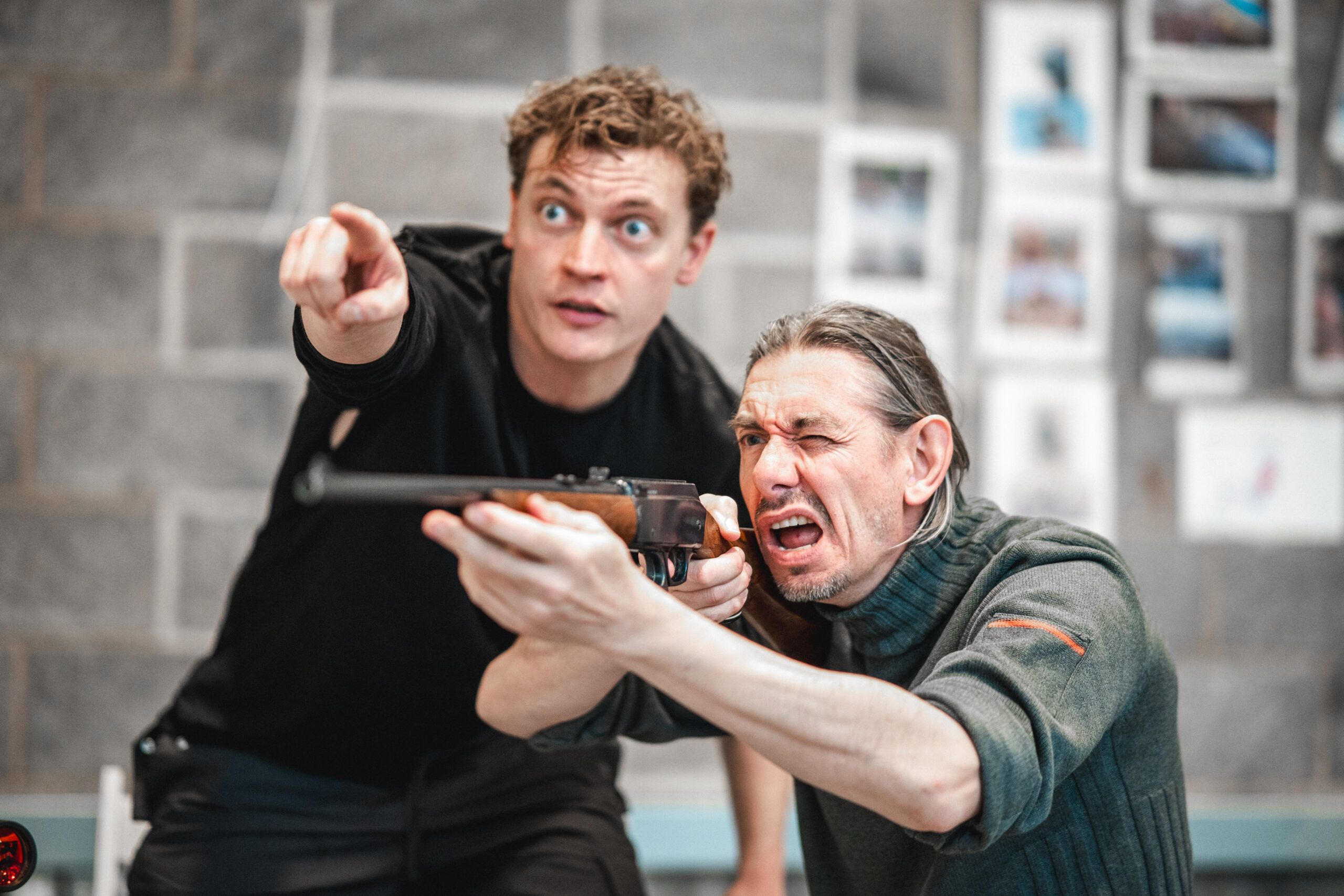
I hope audiences leave talking about the people, not the headlines – about the tenderness inside catastrophe, the ordinary gestures that become acts of survival. Donbas isn’t interested in war as spectacle. It’s interested in what happens to a family, to language, to imagination, when reality fractures. I also hope they’ll be talking about the strange coexistence of grief and humour – how laughter can appear even in the bleakest places, not because things are fine, but because people are still people. At the same time, the story of getting through dark times is a universal one, and I hope people recognise themselves in it. If the play has a message, it’s that survival is made of small things: tea being poured, stories being told, a grandmother pretending she’s Scarlett O’Hara at the kitchen table.
Thanks very much to Olga for talking with us about this exciting piece of new writing.
Donbas plays at Theatre503 from Thursday 5 – Saturday 28 February.



One Comment