


ET Reviewer Grace Darvill on sitting both sides of the stage
At Everything Theatre, we pride ourselves on championing unpretentious, honest, and accessible theatre. But today, the tables are turned. We are sitting down with one of our very own, Grace Darvill, who is stepping away from the reviewer’s notebook to take the reins as both Director and Producer of Shakespeare’s riotous comedy, The Merry Wives of Windsor…
Coming to The Hope Theatre (17 – 21 February) and The Pen Theatre (26/27 February and 5/6 March), this production promises a fresh, fast-paced look at the residents of Windsor, a community defined by its gossip, its schemes, and ultimately, its heart. In an era where we are all searching for connection, Grace’s vision for the play explores how the simple act of shared laughter and storytelling can be a vital balm for our collective mental health.
We spoke with Grace about the challenges of wearing two hats, the vulnerability required to be truly “silly” on stage, and why this 400-year-old sitcom is exactly the tonic we need right now.

You’re taking on both the Director and Producer mantle for this production. How does wearing both hats change your relationship with the text? Does the producer in you ever have to tell the director in you “no”?
Playing both director and producer feels a bit like being in a sixty-year marriage: the two roles bicker constantly while somehow working in complete harmony. As a director, I tend to begin with very specific visions, often rooted in a particular time and place, and then use Shakespeare as a lens through which to explore those ideas onstage. I’m especially interested in the relationship between past and future, and how thematically they often mirror one another. The Merry Wives of Windsor has been no exception. For this production, I’ve grounded the world of the play in the council estate I grew up on in the early 2000s. The social dynamics of Windsor felt instantly familiar to me: women holding the purse strings, gossip spreading like wildfire, and a tightly knit community where everyone knows everyone else’s business.
My relationship with the text is therefore extremely close and personal. It often begins with passion and imagination, and then works backwards toward the reality of how those ideas can exist in a practical, theatrical form. For me, directing is about asking questions and interrogating a vision, while producing is about answering those questions – figuring out how to make them possible. That reality can take many forms, from administrative work to building sets, but most importantly it’s about ensuring that everyone involved in the process feels supported and valued. Occasionally, the producer in me does have to tell the director “no,” but more often it’s about reshaping an idea rather than abandoning it.
Wearing both hats is a genuine privilege. It allows me to be involved in every stage of a vision’s life, watching it evolve into something far richer and more expansive than I could have imagined a few months earlier. Collaboration sits at the heart of both roles, and it’s something I actively crave. In the rehearsal room, play and exploration are essential, especially with a text like Merry Wives, which remains rich with humour and energy and demands curiosity at every turn. Being in that space continually deepens my love for the play. It has aged like fine wine, each page brimming with comedic opportunity while also engaging unapologetically with the politics of society, particularly around class.
The Merry Wives of Windsor is often seen as Shakespeare’s “sitcom.” What was it about this specific play, with its focus on middle-class suburbia and domestic mischief, that felt right for you?
The Merry Wives of Windsor offers creatives a rare opportunity to shine a light on both the best and worst aspects of human desire. Every character is hungry for something just beyond their reach, yet trapped within the confines of their own community, left to stew in that longing over time. That feeling feels especially resonant now, as so many of us are living through a cost-of-living crisis where escape, financial, social, or emotional, often feels frustratingly out of reach.
For me, comedy only reaches its full potential when it is rooted in something raw and uncomfortable. Once that truth is established, it becomes fertile ground for silliness, excess, and play. By identifying the shared themes within the text, Merry Wives creates space for collective experimentation, allowing the work to grow and evolve in dialogue with both the rehearsal room and its audience.
Class is central to the play, yet it remains a topic that is still surprisingly underexplored, despite how turbulent and charged it is in contemporary society. That tension was a major draw for me. As a Shakespeare text, Merry Wives treats class with a rare brutality: it doesn’t soften or sidestep it, but instead places it squarely under the spotlight, inviting us to laugh while also asking us to confront what those hierarchies really mean.
In many of Shakespeare’s comedies, the women are victims of the plot, but here, Mistress Page and Mistress Ford are the architects of it. How are you leaning into that female agency in your staging?
Displacing traditional ideas of what female characters in Shakespeare are ‘meant’ to look like is a real passion of mine. I’m deeply committed to creating space for women onstage to be as three-dimensional as possible. One of my core demands in the rehearsal room is that performers leave the desire to be ‘beautiful’ at the door. Only then can we create female characters that extend beyond surface-level interpretation and move into something richer, messier, and more human. We actively explore what it means to exist as women free from the shackles of beauty standards, pressures that were just as present in the sixteenth century as they are today.
Mistress Ford and Mistress Page feel profoundly modern women: women who refuse to wait for permission, who take matters into their own hands, and who are driven by their own desires. From the very beginning of the process, we’ve invested a great deal of time in feeding and interrogating these characters, asking how we can make them as sharp, joyful, and resonant as possible. What’s emerged are two women who are fearless, deeply lovable, and a genuine celebration of the highs and lows of female friendship, united in their absolute refusal to be victimised.
I admire them enormously, particularly in how they operate as vessels for meaning at every opportunity. Their wit and agency are radical, even now, and lines like Mistress Page’s “Why, I’ll exhibit a bill in the parliament for the putting down of men” land as both riotously funny and quietly revolutionary. The women aren’t reacting to the plot; they are authoring it.
Without giving too much away, what is the “visual language” of this production? Are we in an Elizabethan village, or will audiences recognise some more contemporary “suburban” touches?
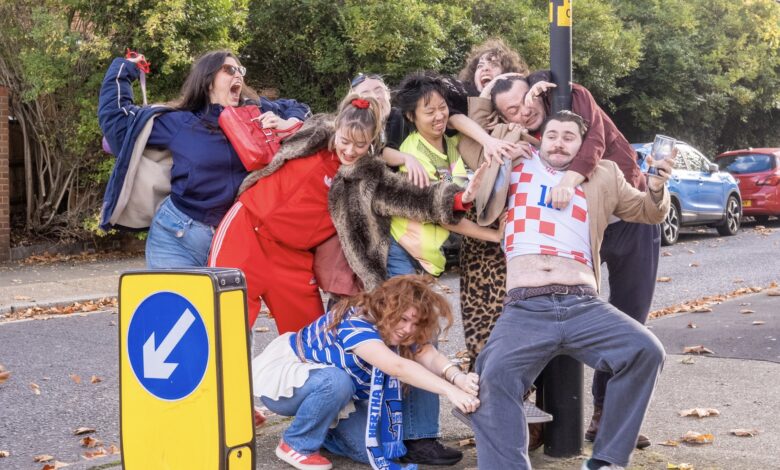
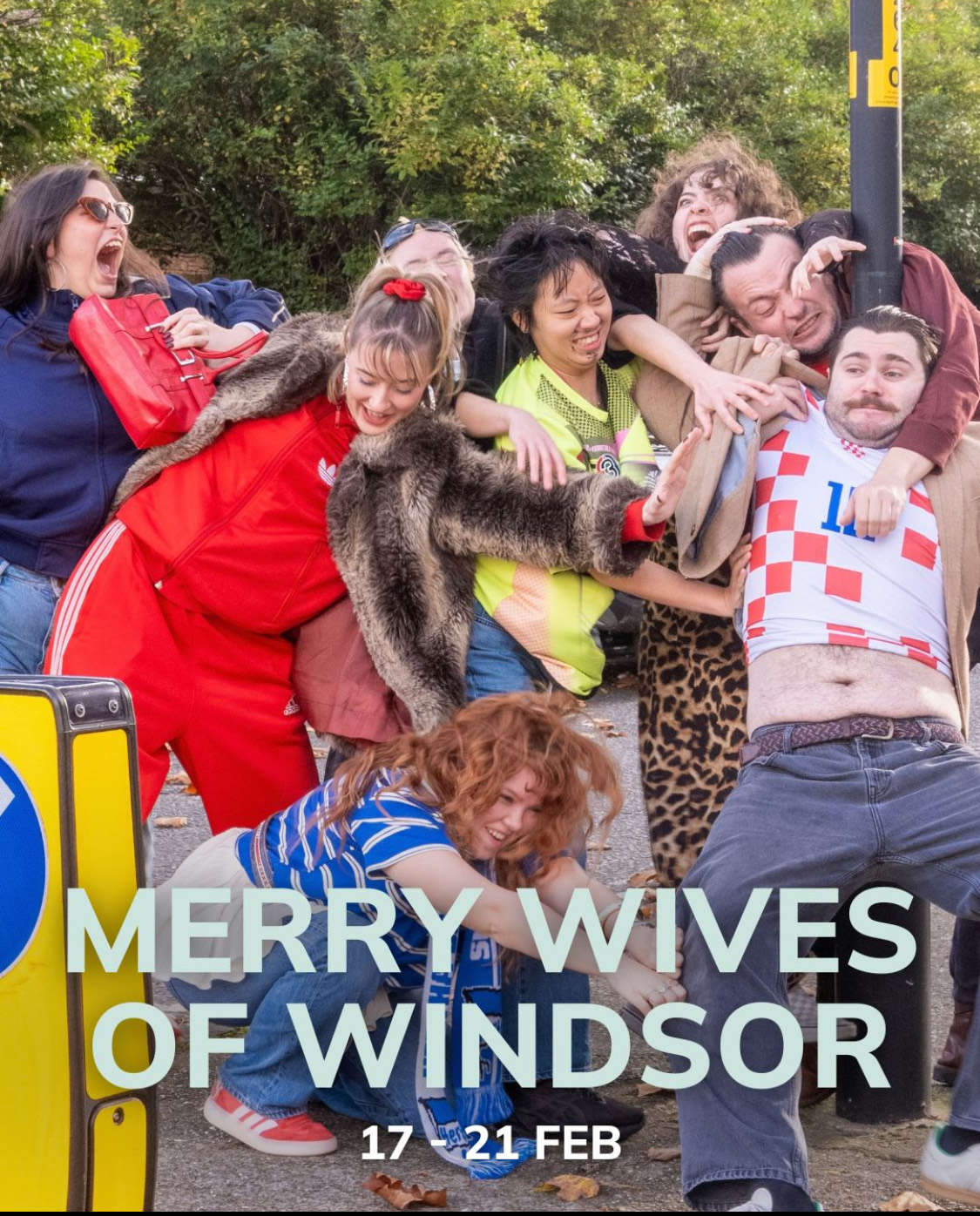
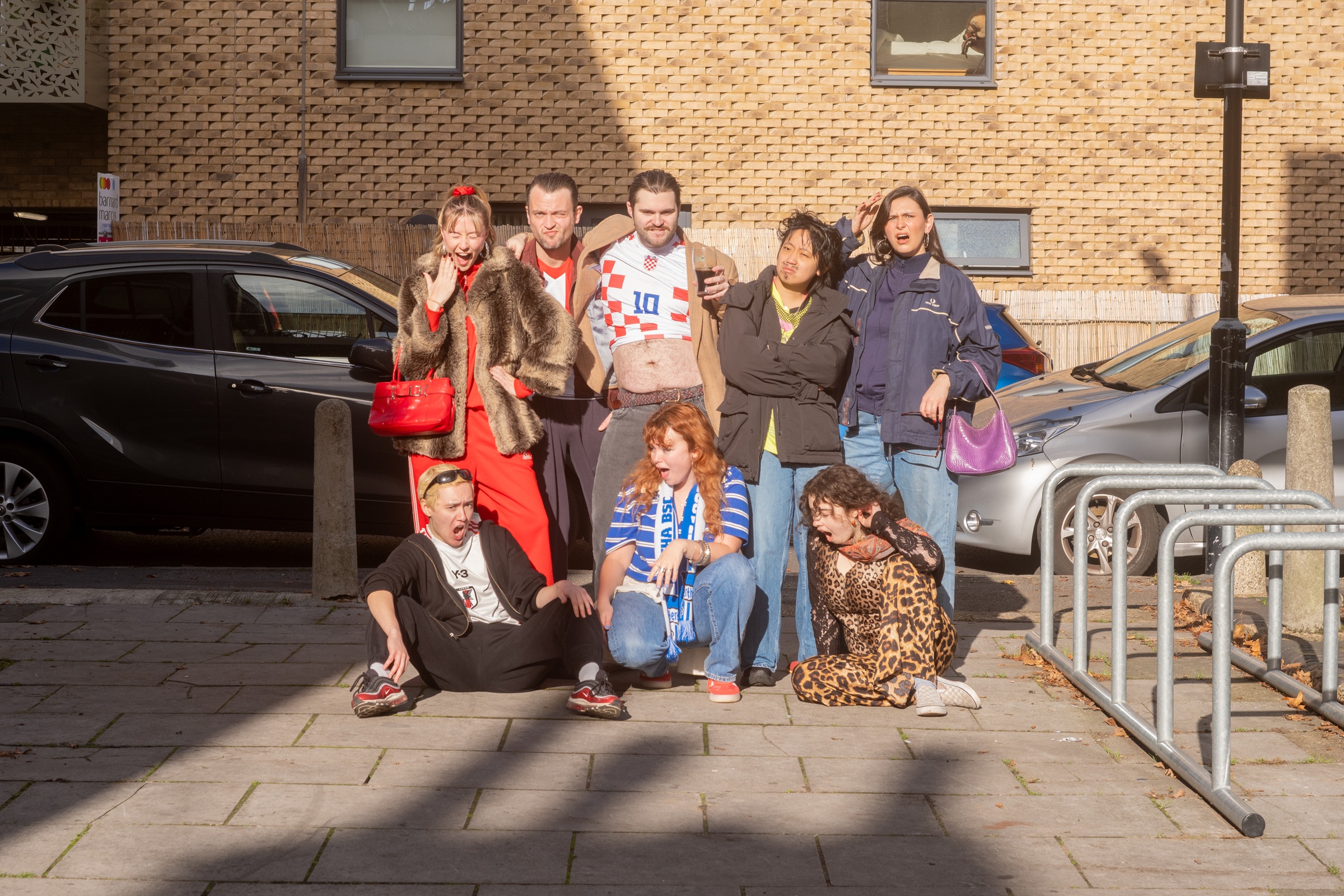
Visually, audiences can expect the very best – and worst – of early-2000s fashion: tracksuits, dangerously low-waisted trousers, pattern on pattern, eyeliner applied with wild ambition, and a Live, Laugh, Love sign never too far away. This is not an Elizabethan village.
The visual language imagines Shakespeare colliding head-on with a council-estate suburb in the early 2000s: familiar, chaotic, and deeply recognisable. Grounded in reality but pushed just far enough to embrace the silliness of the world. Think The Merry Wives of Windsor dropped into that setting and then turned up a notch: heightened, playful, and unapologetically bold.
We often talk about the “importance” of gritty drama, but comedy is frequently undervalued as a tool for well-being. How do you think the collective act of laughing in a dark room helps us process the stresses of the outside world?
Comedy plays an integral role in my own mental health. As someone who openly struggles with anxiety, while also working a day job in an SEMH school, I’ve learned to adapt constantly-from lesson to lesson, day to day – finding new ways to engage a room while also keeping myself grounded. That process feels like a direct parallel to performing comedy: you test, you fail, you adjust, and you try again.
What I’ve found, time and again, is that the one thing that consistently improves both my day and other people’s is laughter. The moment someone laughs, they enter a space of engagement a moment of presence, connection, and shared attention. In that sense, laughter really is a kind of medicine. Creating work that invites people to laugh feels like an act of service: an invitation for audiences to laugh with us, and, just as importantly, to laugh at us.
A common breeding ground for poor mental health is the communal yet unspoken experience of embarrassment and shame. These feelings are deeply familiar, and I believe that as theatre-makers we have a responsibility to confront them. Comedy is a predator of shame, it shines the brightest possible light on the places we are taught to hide, exposing how much power those feelings hold over us and questioning why they exist in such extreme volumes in our society.
Comedy is also an invaluable tool for interrogating some of the biggest and most uncomfortable issues we face. Rather than offering simple escapism, it allows us to view the world through a different lens, one that is freer of shame and rooted in curiosity. It gives us permission to acknowledge struggle while still finding joy, and to laugh our way toward understanding and, ultimately, change.
Farce requires a high level of trust and “silliness” from actors. As a director, how do you create a rehearsal room environment where people feel safe enough to be ridiculous?
Rehearsals are genuinely my favourite part of the process. I promise my actors very little, but one thing I can always offer is a space to play, experiment, and explore together. I have been lucky enough to work in many different rehearsal environments, but one practice I consistently return to as a catalyst for finding the ridiculous is clowning.
In the early weeks of rehearsal, we don’t encounter the script at all. Instead, we “birth” the characters through trial and error. I give prompts, the cast responds, and we discover the world together. The process is intentionally instinctive and performer-led, grounded in what feels right and enjoyable for the actors – because ultimately, they are the ones who will be standing onstage. I often take scenarios from the script without telling the performers where they are from, and explore them without words, allowing physicality and impulse to reveal how the characters behave before language gets in the way.
This approach creates a constant dialogue within the room: we listen, react, and build collectively. I aim to offer what I call a brave space rather than simply a safe one, a room where risk is encouraged, failure is welcomed, and being ridiculous is not only allowed but necessary. Farce demands that level of trust.
As a director, I’m also continually asking for feedback throughout this process. That openness keeps me accountable and allows me to grow alongside the company. Creating an environment where everyone – including me – is willing to take risks is essential to finding the rhythm, flow, and joy that farce requires.
In what way does the specific story of Merry Wives, which ends with a community coming together to “purge” a problem through a shared trick, reflect our need for social connection today?
Merry Wives of Windsor presents us with the storm that is Falstaff – a character who is not unique to this play and who was famously demanded by Queen Elizabeth herself. There’s something deeply poignant about a monarch being so entertained by, and invested in, a character so morally dubious and socially disruptive. Falstaff becomes a kind of lightning rod for the community: excessive, selfish, and ultimately corrosive. The women of Windsor, and the town as a whole, unite to rid him from their system, not through violence but through collective wit and shared action.
What interests me just as much, however, is the duality of villainy in the play. Alongside Falstaff sits Ford – a man so consumed by jealousy that it begins to rot his marriage from the inside. His thirst for control and certainty becomes just as dangerous, if not more so, than Falstaff’s overt misconduct. By leaning into these two forms of antagonism, I want to explore the full spectrum of human behaviour: the good, the bad, and everything in between. The play quietly asks us to consider a “lesser of two evils” debate, while also questioning who gets to decide what behaviour a community can tolerate.
The ending of Merry Wives, where the town comes together to publicly expose and purge a problem, feels especially resonant today. We are living in a time when a small number of truly destructive individuals can have a devastating impact on society as a whole. While we are privileged to live in a comparatively safer country, that safety depends on collective responsibility. The play reminds us that change doesn’t happen in isolation – it happens when communities pull together, communicate, and take action. At its heart, Merry Wives is a celebration of social connection: a belief that solidarity, humour, and shared accountability are not only powerful tools, but necessary ones.
You are usually the one in the stalls with the notebook, how does it feel to now be the one waiting for the reviews to come out?
I’m feeling everything – excited, giddy, scared, relaxed, nervous, exposed, and completely overjoyed. But the overriding emotion is an overwhelming sense of luck. Off-West End theatre plays a huge part in my life. I’ve had the privilege of writing about some phenomenal work, while also collaborating with tirelessly hardworking creatives who, like me, are rarely juggling just one job. That dual perspective has shaped how I make theatre.
To now be in a position where I can contribute to that culture of expression rather than simply observe it feels genuinely unreal. It sits at the heart of everything I do. I work hard to create environments where fun runs freely and where the wellbeing of everyone involved – both audiences and creatives – is prioritised. That care is as important to me as the final product itself.
All I can hope is that by committing fully to an intrinsically silly, playful, and collaborative process, the work will be received in the spirit it was made. And, as they say… all press is good press. Right?
Thanks to Grace for taking time out an already busy day to chat to us about her upcoming play.
You can catch The Merry Wives of Windsor at The Hope Theatre between Tuesday 17 and Saturday 21 February, and Pen Theatre on Thursday 26 and Friday 27 February, and then Thursday 5 and Friday 6 March.





One Comment