Full of dangerous gambits and forays into farce, Tim Crouch's The Tempest is a daring exercise in meta-theatrical theory.Rating
Excellent
This is not The Tempest. Amanda Hadingue‘s Antonia declares as much at the end of the play. Instead, plot subordinates to the theory of language, the words themselves abandoned in search of a wider answer to what it means to be on stage.
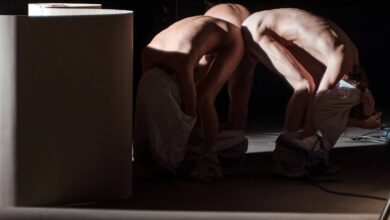
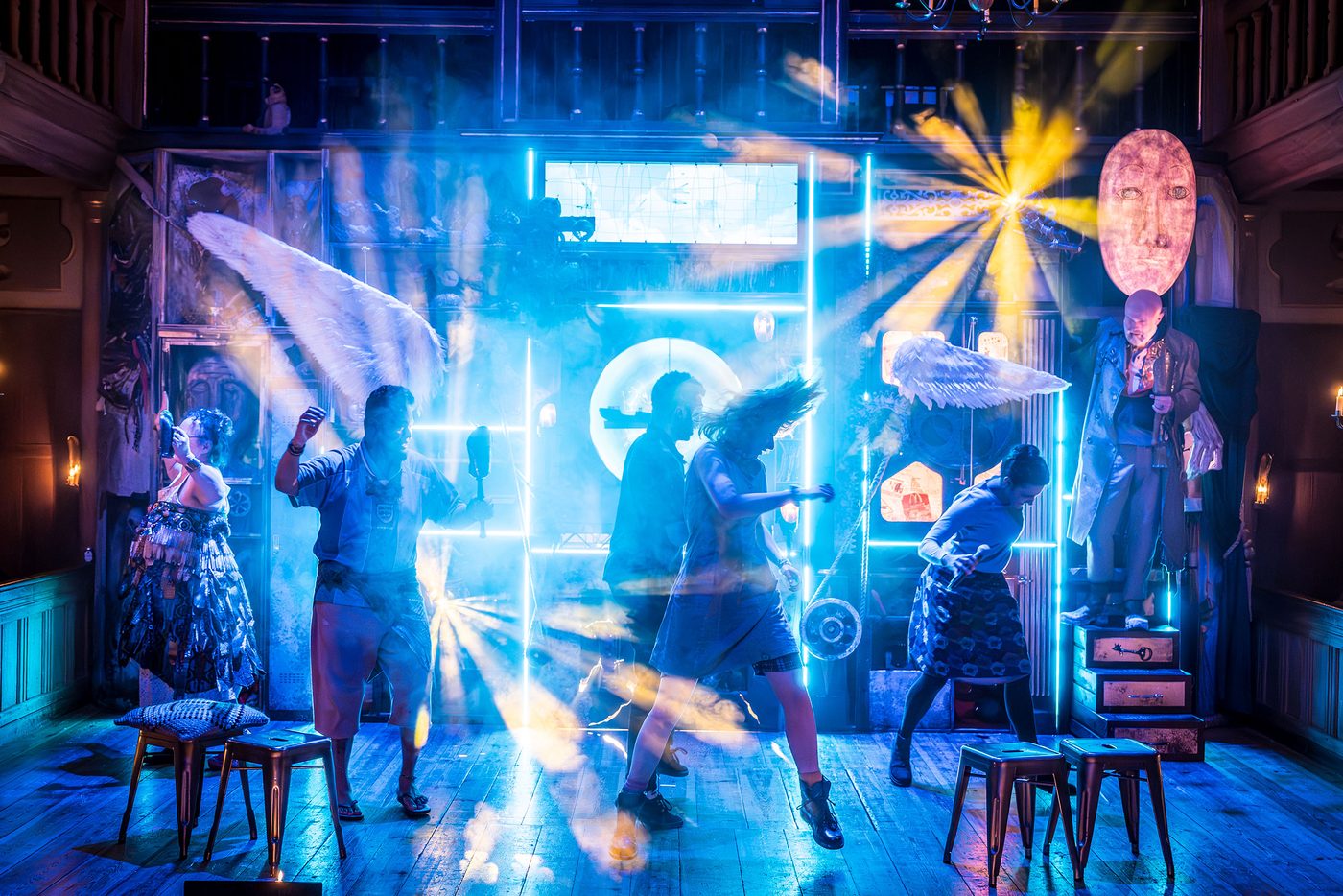
From the beginning, an underlying ritualism is effused with seemingly impromptu choralism, meant to indicate rehearsal, where the almost childlike conjuring of a storm between what the production calls the Four Storytellers (Prospero, Miranda, Caliban and Ariel) evokes a Jean Genet-esque appraisal of what it means to play within a play. Asking where the artifice of theatre truly lies, actors as audience members and ushers climb up onto the stage, and the principle four cast members often secede into audience onstage, watching newcomers, stood next to them but unseen.
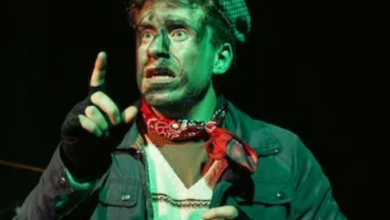
It is often a dangerous gamble in egoism when a director puts themselves on the stage, but here, crucially, Tim Crouch stands before us both as Prospero and Director. As audience members climb on stage, often against his will, Crouch watches his fourth wall, his constructed play eroded by audience interruption and his own reprimand of an audience member (who is later revealed to be Antonia) for being on her phone. And so too Prospero watches power on the island pass into other people’s hands, his textual authority wasting away as language slips from his control; Caliban (Faizal Abdullah) revolts “you taught me your language”, but speaks most transportingly in Malay, for the audience meaning then divined not from semantic proclamation, but from his eyes, his body, his fury. Like Lady Macbeth, like Iago, Prospero’s power is in his command of language, but here instead is a hopeful enactment of a power draining from a colonial force by sacrificing lines from the famously verbose Prospero to the other story tellers. This exercise in theory and the philosophy of the stage is excellently done in substance, but is too disconnected from the original plot to justify the play’s 2hr30 runtime. When trying to reconnect with the plot, the audience member is met with a chaos of characters who are both audience and actor, where the individual’s usual emotional stakes in the action are dislocated. Indeed here, brevity may be the soul of more than just wit.
The general design of the production is excellent – from Anna Watson‘s lighting design (technical and candle), Emma Lucy Hughes‘ costume, Gilly Church‘s makeup and hair, to Rachana Jadhav‘s bold and beautifully wrought set. Special mention must go to Orlando Gough, the composer, and to vocalists Emma Bonnici and Victoria Couper; the haunting and innovative music that fills the room from Bonnici and Couper’s ever-moving presence amongst the audience is completely enthralling, and never more so than during the climax of Naomi Wirthner‘s performance as Ariel, where her calm and steady presence gives way to a terrifying wrath in a sequence that is one of the highlights of the production; Wirthner is flawless here. Sophie Steer‘s Miranda and Patricia Rodriguez‘ Stephano are also particularly excellent, though all actors are well-cast and proficient in their various roles.
If an audience member is looking for The Tempest, they should look elsewhere. But this production has so much to offer any theatregoer seeking to understand better the world of artifice they patronise. Crouch and associate director Justina Kehinde have captured the meaning of theatre onstage, and whilst the storyline is ironically lost in this production about storytelling, this is a performance where it is a privilege to get lost in the power of theatre.
Directed by Tim Crouch
Candlelight design by Anna Watson
Composed by Orlando Gough
Design by Rachana Jadhav
The Tempest runs at Sam Wanamaker Playhouse, Shakespeare’s Globe until Sunday 12 April.