An absorbing fantasy adventure that delights and entertains as it explores the power of music as well as the dangers of letting obsession get the better of you.Rating
Excellent
In every workplace you will find strong friendships and possibly a few rivalries. The Silence That Follows, written by Marie Castel, follows members of an orchestra where these feelings are amped up, thanks to the added complication of the supernatural.
The disconnected Harry (Oliver Maynard) and ambitiousOphélie (Castel) are talented but dissatisfied musicians who aspire to progress to a more prestigious position. They are understandably confused but quickly delighted to discover that after performing a piece of harmonious music together a mysterious spirit (Rufus Hunt) is summoned. The excited pair experiment to discover how the power of music can perform such magic, until the arrival of amateur musician Giulia(Anita Brokmeier)puts this in jeopardy; her playing is so bad that it prevents the magic from working. Growing ever more obsessive, Harry and Ophélie decide there is only one solution; to drive Giulia away using every underhand trick they can think of. Things do not go to plan.
Castel’s script dives straight into the action and immediately builds suspense thanks to a clever framing device which establishes that the events we are watching are flashbacks. Harry is relating the story in the aftermath whilst justifying himself to an unseen authoritative figure, with Hunt providing the imposing faux-friendly voice. This immediately sets up two compelling mysteries to be uncovered; what was it that went so wrong, and who is this figure attempting to uncover it? Interrogation scenes are interspersed throughout the main narrative, complementing each other and effectively building tension in both timeframes. Eliott Sheppard’s creative lighting not only visually distinguishes the two timelines but also builds tension; in a classic interrogation technique, the stage is plunged into darkness with Maynard lit up in spotlight.
Although the narrative is loosely inspired by Symphonie Fantastiqueby Hector Berlioz, you do not need to be a fan of classical music to appreciate and enjoy the story. With their new lease of enthusiasm, Harry and Ophélie experiment with a range of musical genres as they study which is successful in summoning the mysterious spirit of music.
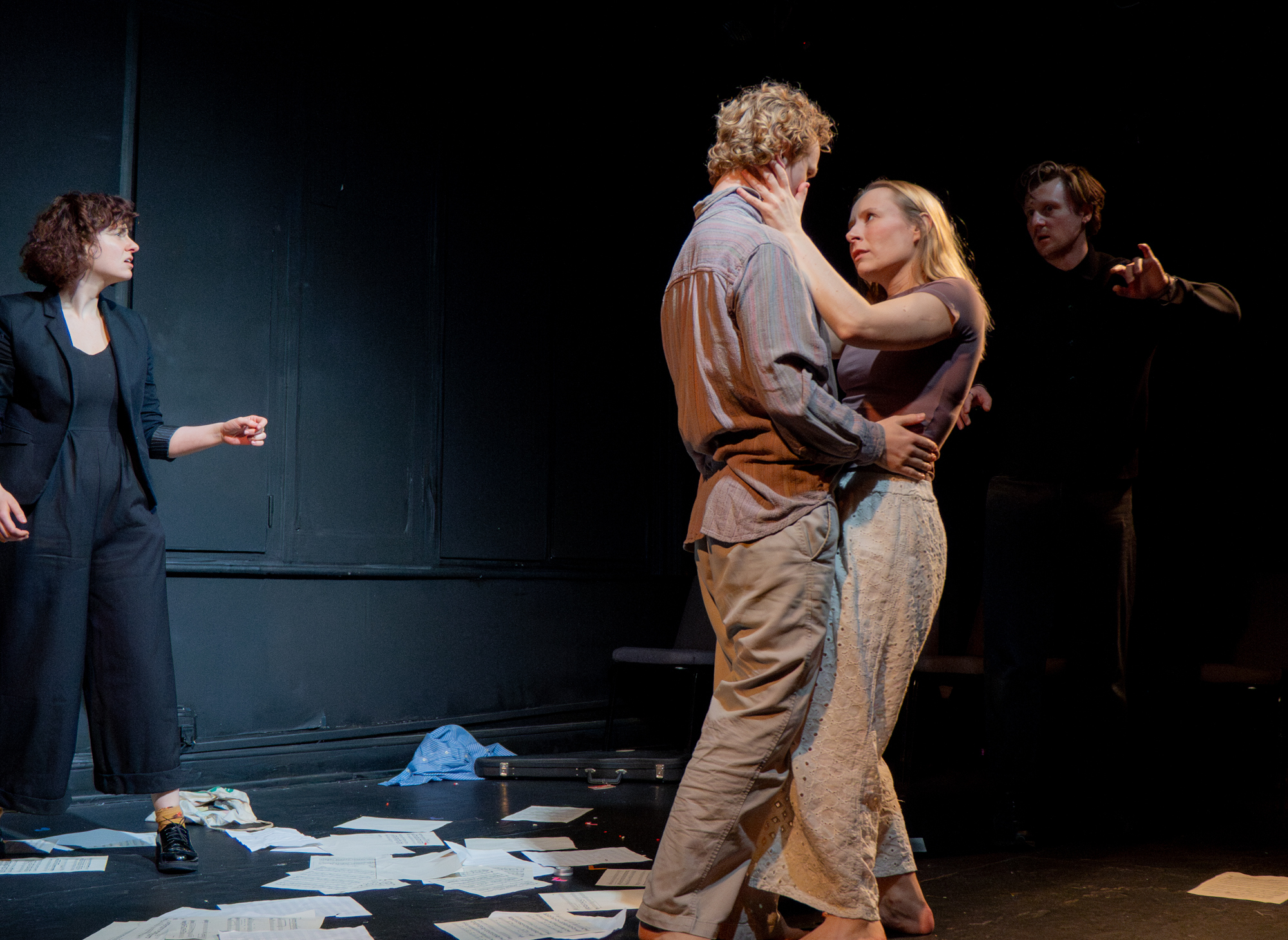
Where there is music, there is often dancing to be found. It soon becomes apparent why the stage is an entirely empty space with no furnishings; the cast need lots of room. Director Anna Clart and the company have devised a range of energetic dance moves to match the emotions of the story and showcase pop, electronic, and classical music, occasionally played live on violin. The musical sequences are borough to life by Clart’s sound design and Sheppard’s lighting, which complement the pace of the music; lights strobe and music pulses as Maynard engages in frantic electronic dance, or the lights brighten as Castel joyously performs a waltz to classical music. Hunt glides across stage as the enigmatic entity and Brokmeier impressively contorts herself to the rhythm.
Maynard and Castel are an engaging double act, presenting the leads’ contrasting personalities and priorities, which are also reflected in their costumes. Harry’s carefree nature is reflected in his overly relaxed style of t-shirt, hoodie, jeans and trainers, whilst Ophélie dresses for success in sombre black trousers and highly polished shoes, with coordinated orange jumper and socks. When they both switch to all black, it is a subtle visual cue that the story is taking a dark turn. This contrasts with the looser light colour clothing of Hunt’s ethereal spirit.
The talented cast brings the human drama and emotion to life verbally and physically. Both elements of this polished production are engaging, showcasing how the joy of music can inspire and the human capacity for positive and darker emotions.
Written by Marie Castel
Directed and Sound Design by Anna Clart
Lighting design by Eliott Sheppard
Movement devised by the company
The Silence That Follows has completed its current run.