Interview: Packing up for a sensory, immersive family adventure with The Blanket Fort Club

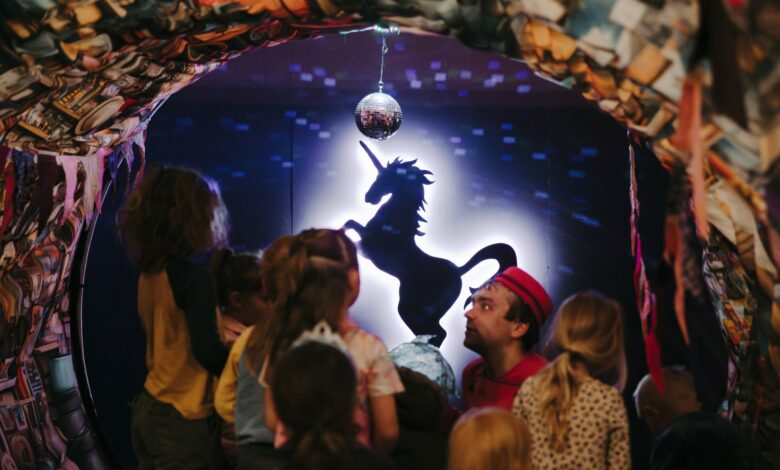
George Stone checks us in to Last Unicorn Airways
Pack your suitcase and get ready for Last Unicorn Airways, a family adventure for ages 4+ which offers a unique, sensory and immersive adventure. As the team from The Blanket Fort Club prepare for the retour of the show this spring, we catch-up mid-rehearsals with Artistic Director George Stone, a director and dramaturg from Sheffield specialising in sensory immersive theatre, to find out more.
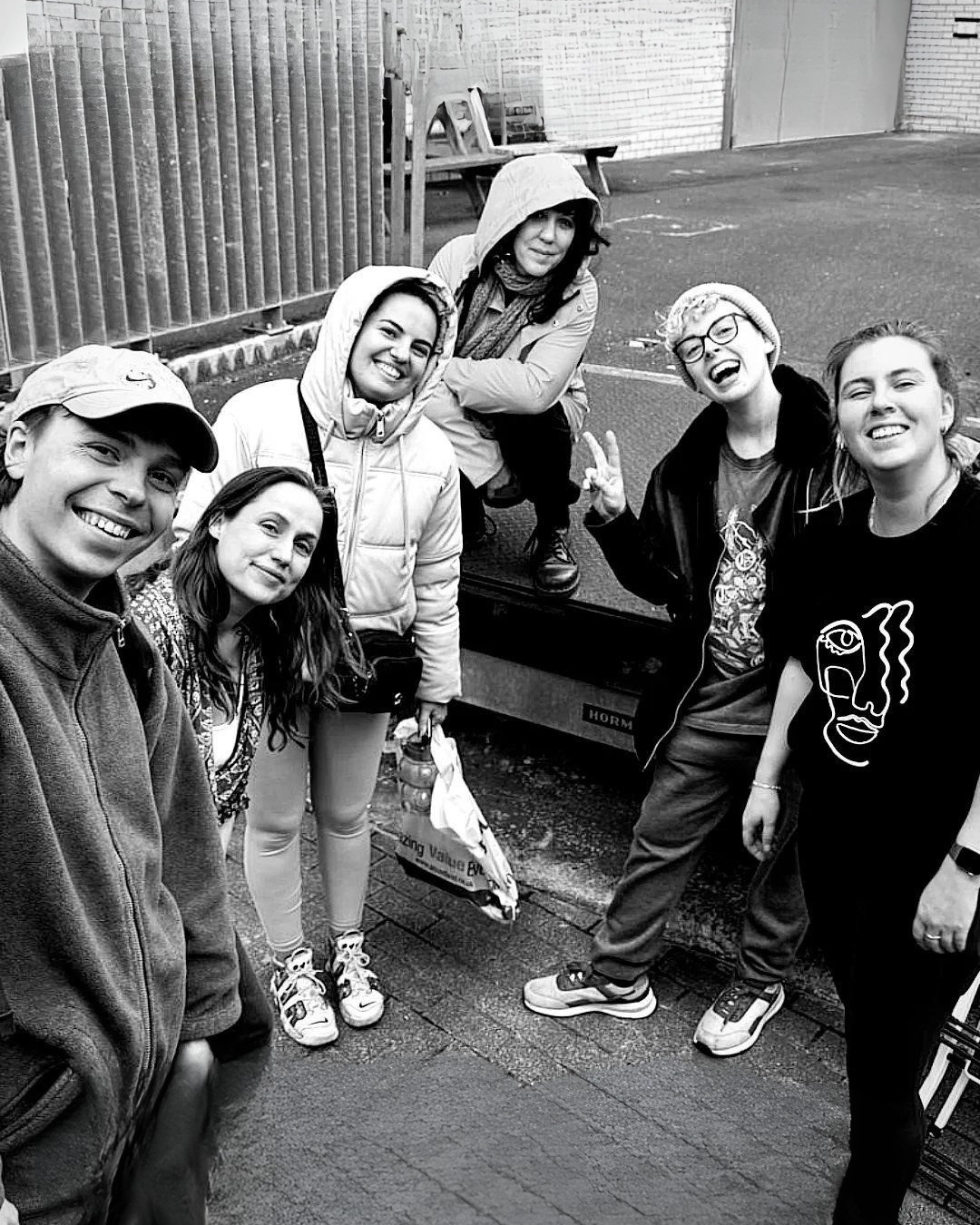
Hello, and thanks for taking the time out of your busy schedule to give us a glimpse into the world of all things Last Unicorn Airways. Maybe we can start with unpacking your approach when making work, and the creative ideas that kickstarted the journey of making this particular show?
Last Unicorn Airways began with a simple ambition to make a sensory, immersive theatre experience that was genuinely unique and inclusive, something that could exist for families and schools in commercial venues, libraries, and community spaces. From the start, the aim was to make sensory, playful, immersive storytelling visible and vital.
The show’s themes were influenced by reflections that came out of the pandemic. With travel restricted and the world feeling precarious, I kept thinking about how we connect, play, and explore when the usual ways of moving through the world are impossible. I love our big, varied, beautiful world, and I wondered: if fast travel didn’t exist, how would we slow-adventure, meet new people, and see the world?
Hans Christian Andersen’s The Flying Trunk crystallised this thinking. In the tale, a young man loses his worldly goods, is given a flying trunk, travels, makes friends, falls in love, and shares stories, until the trunk is destroyed by his own folly. What happens next, when the magic changes? In Last Unicorn Airways, that question becomes the show itself: wandering, discovering, connecting, and sharing stories in a world that’s familiar yet full of wonder.
Your work aims to particularly access audiences with complex needs and disabilities – can you tell us why you do this and how the work may differ from other plays for young people and families?
Last Unicorn Airways is designed to engage audiences fully and dynamically, allowing everyone to explore, imagine, and move through the story in their own way. The work doesn’t rely on long stretches of stillness or fixed ways of engaging; instead, participants can interact through touch, sound, movement, or imagination. Embedded creative audio description, visual non-verbal storytelling, and immersive, sensory environments sit alongside the captivating classic tale of The Flying Trunk, giving the story the capacity to resonate on multiple levels at once.
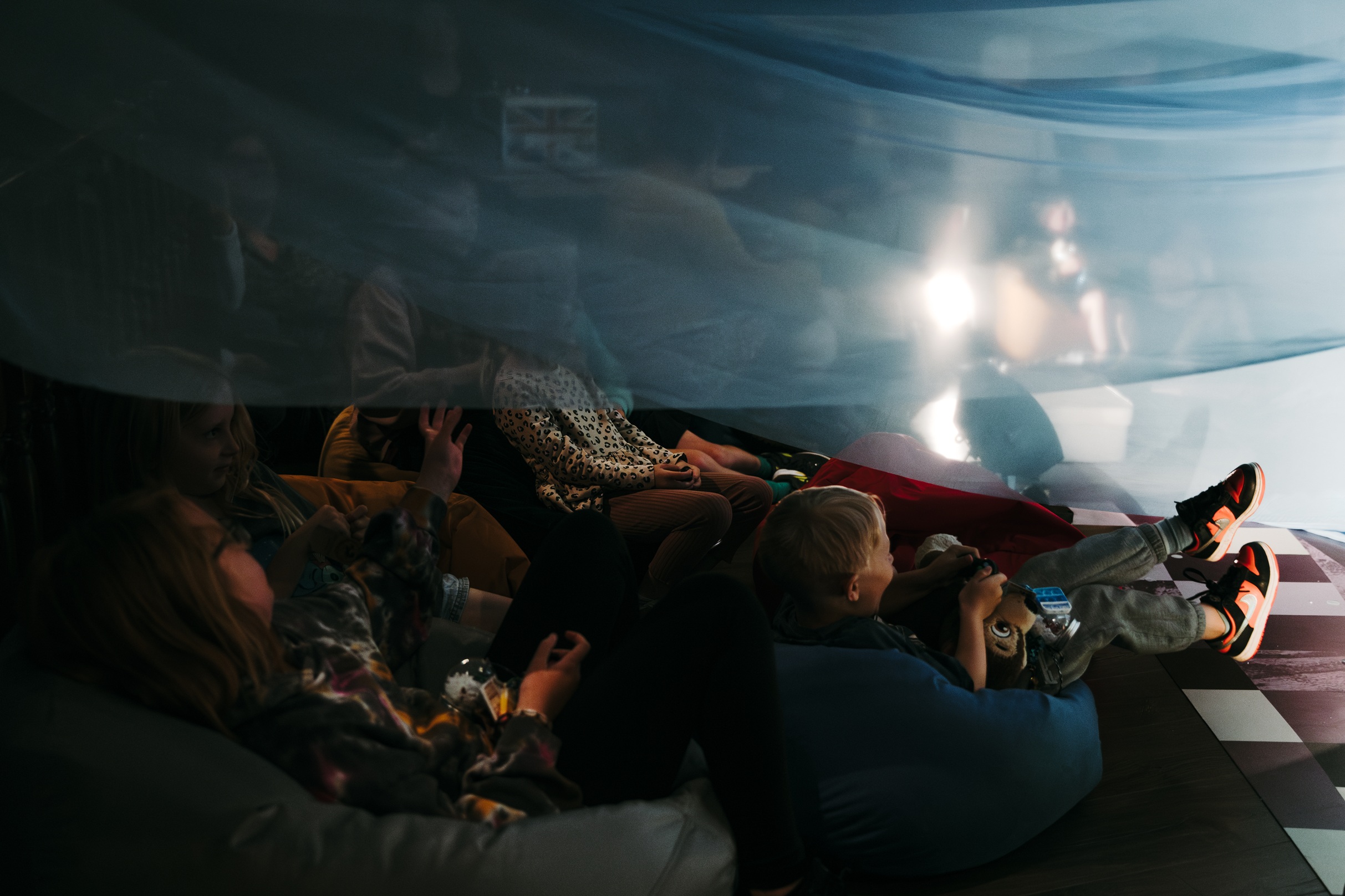
This approach emerges from the belief that theatre can meet its audience where they are without reducing its ambition. Inclusivity isn’t an add-on; it’s a design principle that allows the art to be more expressive, layered, and engaging. Light, sound, pacing, and spatial choices are carefully calibrated so the environment is immersive rather than overwhelming.
Crucially, this work doesn’t simplify or dilute. By inviting participation, offering multiple modes of engagement, and respecting individual rhythms, the show becomes deeply human, imaginative, and surprising. This openness doesn’t just benefit audiences with specific needs, it enhances the experience for everyone, creating a space where curiosity, play, and storytelling thrive together.
The immersive, intimate feel of the piece is very exciting for young audiences and families and, looking at the production pictures, there seems a lot to be experienced, so what else should audiences expect?
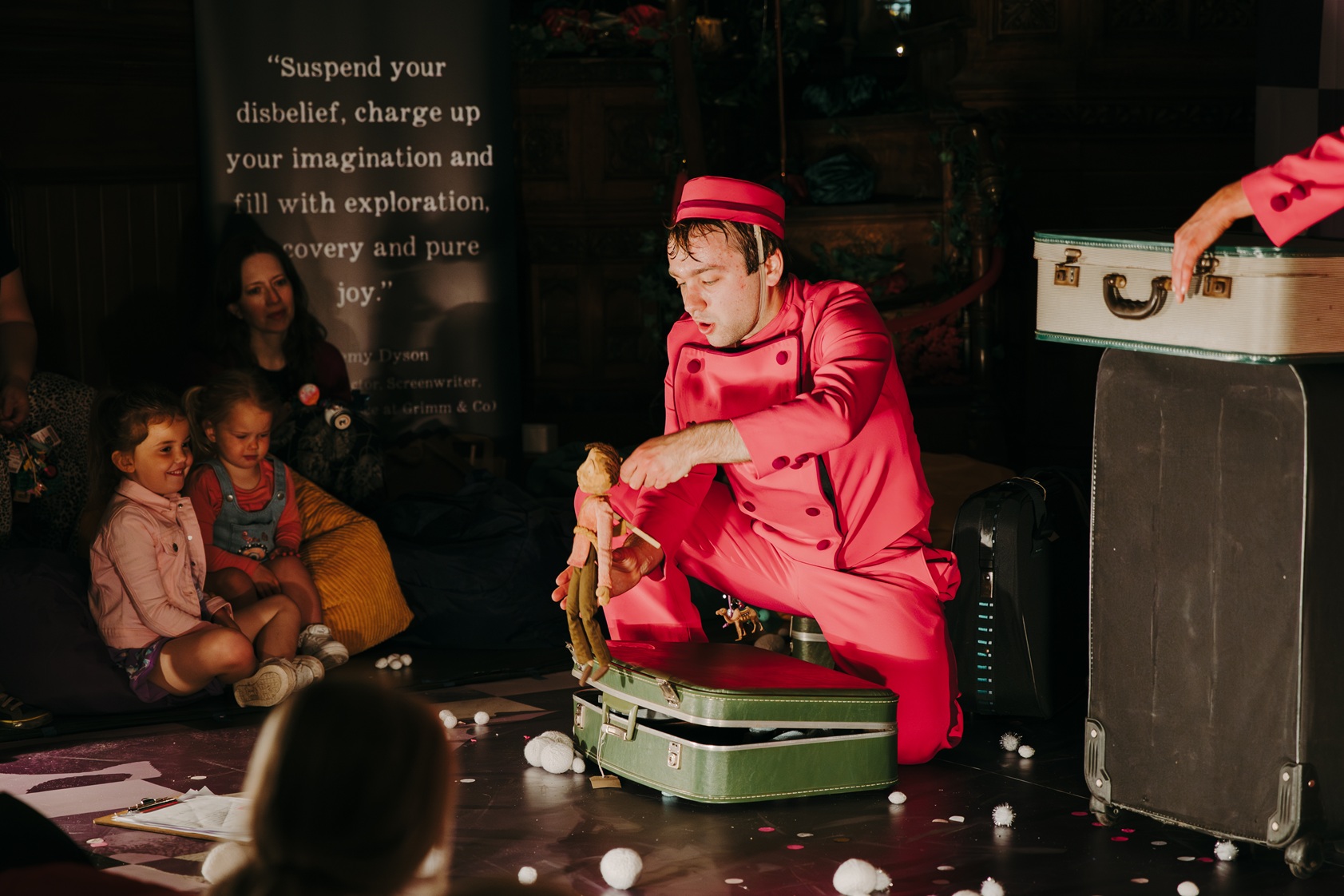
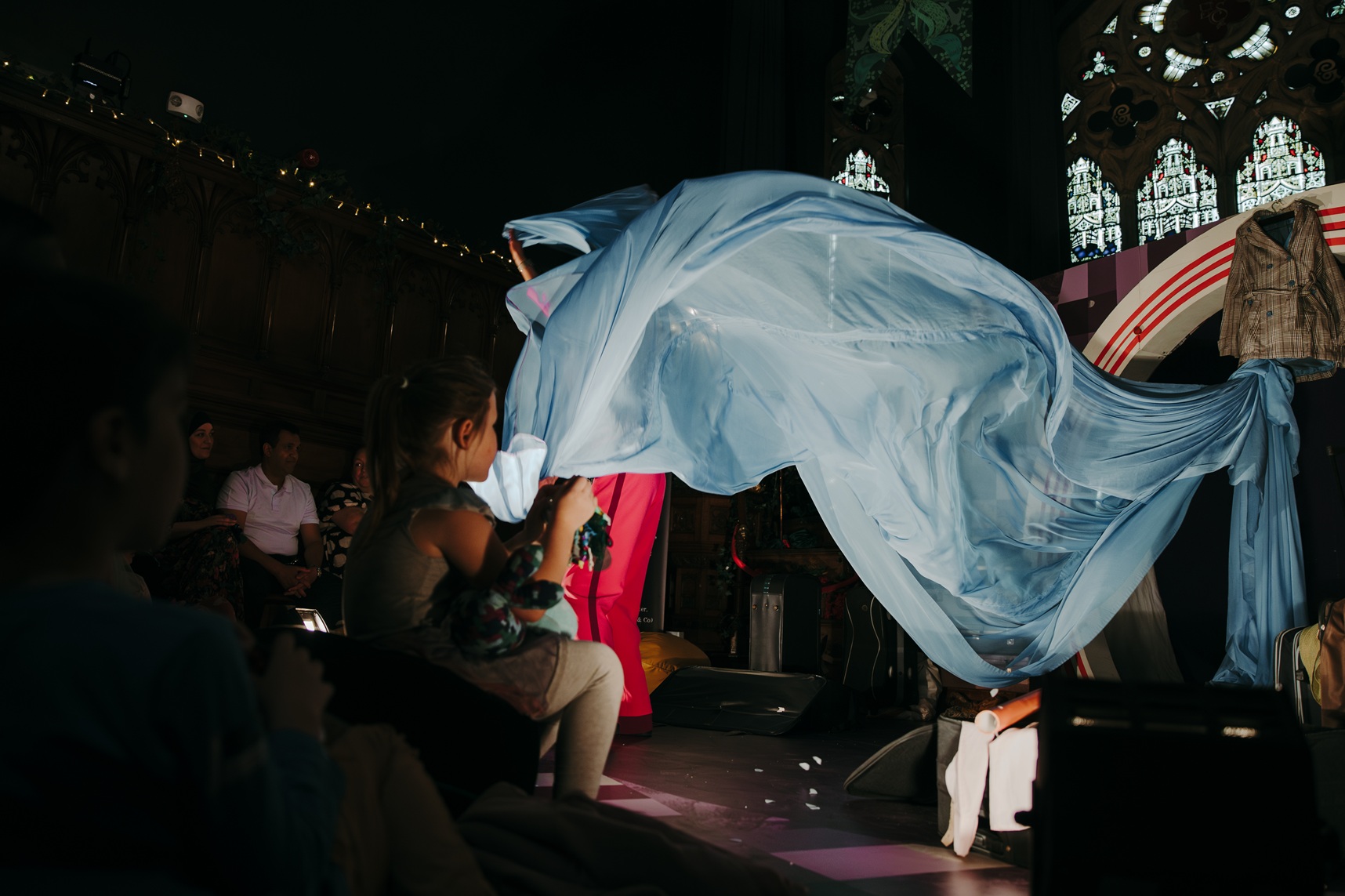
Audiences don’t just watch Last Unicorn Airways. When they enter the space and meet Luggage Handler 1 and 2 sorting through suitcases, they become Luggage Handler 3, invited to travel “here, there and everywhere, round the world in 42 minutes, on the bestest trip, fastest trip, latest trip ever!” With LH1 and LH2 pulling out trinkets and stories from cases, they encounter animals, have snowball fights, glide through Venice by gondola, watch the Eiffel Tower sparkle, journey to ancient Egypt and more. They are then whisked into Hans Christian Andersen’s magical tale, The Flying Trunk, about an adventuring storyteller whose stories captivate the world but who finds he can no longer fly.

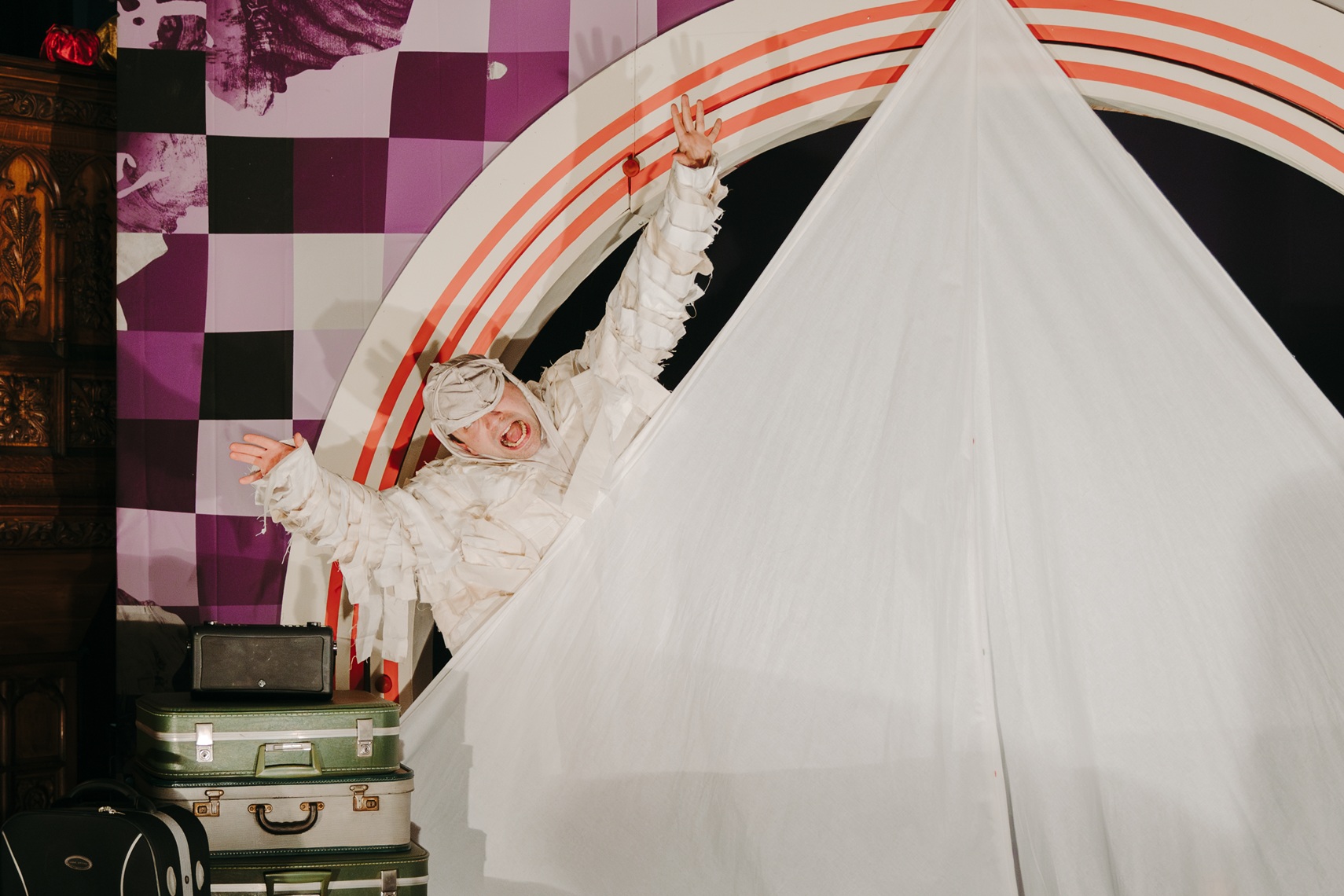

Importantly, audiences help shape the journey, co-creating the action and becoming part of the story. Beautiful music, playful song, and immersive interactive moments thread the adventure together, building to a surprising and magical immersive ending that lingers long after the show finishes. Beneath this fun and spectacle, the piece explores friendship, resilience, and how we navigate our changing world. Children and adults move, imagine, and feel alongside the characters, experiencing both wonder and intimacy at their own pace. Trust me, it’s a whirlwind, participatory adventure – immersive, joyful – where audiences travel far, laugh, play, and leave inspired by the magic of stories told up close.
Touring can often be hard for artists on the road. How do you keep the play fresh and energised, even on a wet Thursday afternoon?
Touring immersive, sensory work means stepping into a new version of the show every day. No two performances are alike. Each audience brings its own rhythms, curiosities, and emotional temperature, and the performers respond in real time. That sense of liveness keeps Last Unicorn Airways fresh; it isn’t a show on repeat, it’s something we enter together.

Arriving in new towns and venues becomes part of the dramaturgy. The rooms we transform, the people we meet, and the small adventures we encounter feed directly into the spirit of the piece. Exploration and connection sit at the heart of the stories we tell, so touring doesn’t drain the work, it actively deepens it. Hans Christian Andersen, who wrote The Flying Trunk, would 100% approve. We reference his words in the show: “To move, to breathe, to fly, to float… to travel is to live.” That idea of motion, emotional as much as physical, runs through the entire experience. For me, the performers are storytellers rather than fixed narrators, with space to improvise and respond. A hushed room invites intimacy; a buzzing one sparks playfulness. The show stretches and reshapes itself accordingly.
And wet Thursday afternoons are exactly what this work is for. When a child leans in, eyes wide, or a family finds themselves briefly transported somewhere else, the room lifts. Those moments don’t just sustain the tour, they are the point of it. Moments of connection and wonder.
So finally, if you were to sum up the play in three words, what would they be?
Welcoming, Imaginative, Visceral.


You can read our 2025 review of this show when it played in Rotherham here.
Last Unicorn Airways is aimed at ages 4+ and is on a 33 venue tour from Saturday 7 February until Saturday 23 May, starting at Harlow Playhouse, with its first London stop at Jackson’s Lane on Sunday 8 February.
Full tour dates can be found via the below link.