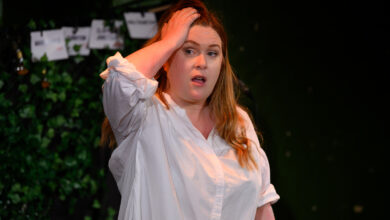
Interview: Beyond the Charm: Navigating the Moral Tension of Daughter
Daughter, Lion and Unicorn Theatre


Director Alexandra Rizkallah and actor Cristiano Benfenati discuss the urgent need to revisit Adam Lazarus’s “unsettling” interrogation of toxic masculinity.
Daughter, written by Adam Lazarus, was first on these shores early in 2020. A darkly satirical monologue that interrogates toxic masculinity and complicity, full of unsettling charm and an ability to polarise an audience, it is a show that doesn’t take any prisoners. And now Little Lion Theatre Company are set to bring their take on this high-stakes, controversial piece of fringe theatre to the Lion & Unicorn Theatre.
But before it opens on 3 February, director Alexandra Rizkallah and actor Cristiano Benfenati found some free time to find out just what makes this show tick and what makes them want to tackle it at all.
Hello both. So, before we dive deeper into Daughter, can you give us a quick idea of what audiences should expect from it?
Alexandra: Hi Rob! Yes, audiences will enter the theatre and experience the theatrical equivalent of stepping into a rollercoaster that will surprise them at every turn. In 75 minutes, it will have you laughing, and applauding, but then before you know it you realize that this ride isn’t very fun anymore, and that it may be all too familiar.
Cristiano: Hey Rob! I think audiences should expect laughter, discomfort, anger at times, but above all a challenge. At times hilarious and at others unsettling and difficult exploration of where their line is when it comes to toxic behavior.
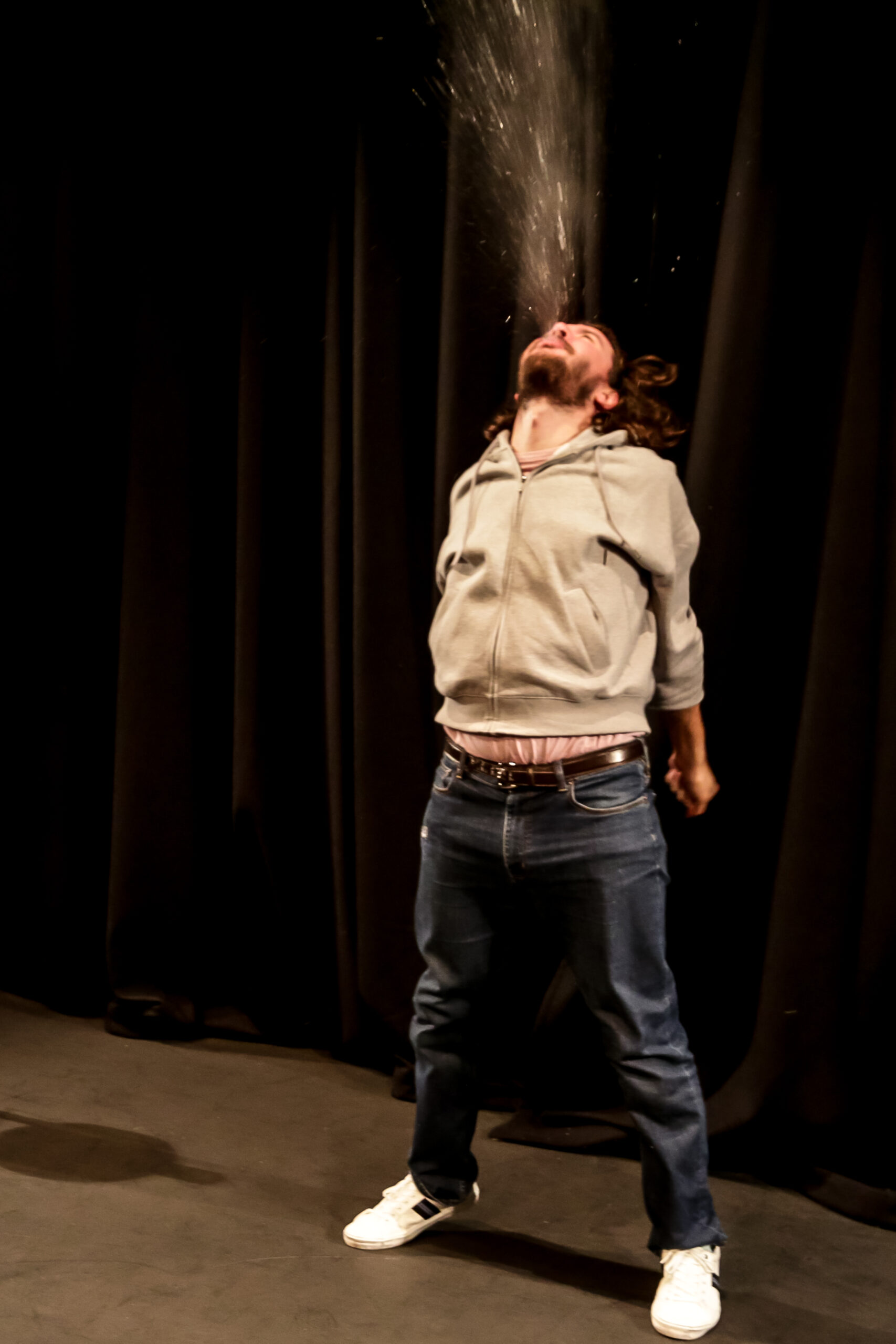
What was the driving force behind wanting to bring this back to the stage in 2026? In the current cultural climate, do you feel the play’s message about the “subtle ways we condone misogyny” has changed or become more urgent since it was first written by Adam Lazarus?
Alexandra: Daughter is one of those plays which linger with you long after you first experience it. For me that was back in 2020, when the original team had premiered the show. It was like nothing I had ever seen before and I thought these artists were brilliant, inspiring and a little crazy. And now I have gotten to be one of those crazy artists! Because just as your question asks, the themes of condoning misogyny have certainly become more urgent in today’s climate, and feel increasingly impossible to ignore. What’s so compelling about Daughter is that the play is deceptively subtle; it doesn’t shout its message or wave a headline in your face. Instead, it seduces you, asking you to sit with this man’s perspective and decide for yourself when empathy turns into complicity, and when understanding becomes unacceptable. That moral tension, and the responsibility it places in the audience, was the driving force for me as a director.
Cristiano: I was lucky enough to be brought on board to this project, so while I didn’t play a part in the initial impetus to bring this play back, I’ve had the challenge and honor to grow alongside it. From the moment I read it I’ve felt how deeply affecting it was and is, how unfortunately relatable many of its parts are, and how relevant it still felt. The fact that, upon reading it, the overwhelming feeling was that of familiarity I think highlights the play’s urgency.
Father is described as “engaging” and “charming” despite the toxic reality he represents. How do you ensure the production critiques the character’s behaviour rather than accidentally glorifying it?
Cristiano: I think that the women with whom I’ve had the pleasure to work with have been leading the charge in making sure that doesn’t happen. On day one of our rehearsal process, Alexandra’s note to me was to “Be that guy,” and I found that to be the guiding light that has led this journey, at least from the perspective of the acting work on stage. In every aspect of this process – from Alex’s direction, to the movement work with Sasha, to the intimacy exploration with Liz – I think what emerged has been that the best way to ensure the critique comes through is showing fully and unreservedly who this character is, letting the charm be there without shying away nor justifying the flaws that will emerge.
Alexandra: This play devilishly dances on the line, at times crossing it, at times daring you to draw it. That’s the remarkable thing about the Bouffon style that lies at its core. Bouffon utilizes satire and the grotesque to critique society, but where Daughter is uniquely interesting is that instead of making this character an outcast, our performer is starkly conventional. So he is all these things at once, charming, likeable and horrifying, but that juxtaposition is exactly what makes him real.
Throughout the process, I have constantly invoked the play as my guide in striking this balance as it’s crafted with such care and precision. I have also surrounded myself with a team full of astute, inventive, and rigorous artists, each of whom has been essential in shaping the production.

Alexandra, how does the transition to a more intimate space such as Lion and Unicorn change the way you direct? In a show that deals so heavily with the audience’s reaction, does the closer proximity heighten the horror or the humour?
Alexandra: Our previous venue was intimate, but the Lion and Unicorn takes it to a whole new level. Your question has been on the forefront of my mind, and is a big aspect of the direction to address in the rehearsal room. Proximity is absolutely key to the unraveling of familiarity and comradery to becoming the object of one’s revulsion. The overall composition requires a very delicate touch to ensure the tension builds and lands exactly as intended, and its spacing is a big factor. The piece is volatile, daring, and exhilarating to craft, and working on it has been one of the biggest challenges and highlights of my career.
The script includes the provocative line: “Aren’t I here to share with you exactly what I’m actually thinking and feeling so that we begin to move forward?” so directly challenging the audience. During its original UK run at Battersea Arts Centre, at a post-show Q&A, it was clear there were men in the audience offended at the suggestion they might be complicit, as if it was an attack on all men. Is this an attitude you have experienced with your production yet and one that justifies that line?

Alexandra: Daughter is going to be an experience that challenges the spectator regardless of their gender. It addresses a problem ingrained in our society, not just the individual. Since the play displays this through the lens of a male character, it is certainly justifiable to feel offended, however, it may be a question to uncover what is driving that feeling. That’s what makes this show palpable, this emphasis on the relationship between the performer and audience. With a new audience every night bringing their own lived experience with this topic, it’s a unique encounter every time we perform it. This is one of the powers of live performance. We are also continuing this tradition of post-show conversations after every performance with the audience, so we will get to keep exploring this together.
Cristiano: I don’t believe we have experienced this kind of reaction so far. I think the overwhelming response in our first run was rather one of recognition. Seeing how the character’s journey precipitated into its darker parts, the challenge was clearly felt and the discomfort was undoubtedly there; however, as understandable as defensiveness is as a male response given the intensity of the subject matter, I don’t think we have encountered it yet.
And ultimately, what is it you want audiences to walk away thinking about from your production of this show?
Cristiano: I would like audiences to walk away thinking about how easily these behaviors can creep into everyday life, how common they are, and how to recognize and discourage them, both in themselves for the male part of the audience, and in others.
Alexandra: I just want them walking away in conversation! This show doesn’t tell you how to feel, and it doesn’t provide any answers. It serves up a problem, in a hilarious and unsettling way, and leaves you to decide how you feel about it. Its primary goal is to get people to engage in these difficult conversations. So if people are talking, maybe with who they came with, maybe with someone they’ve just met, or maybe with the artists creating it, that is ultimately what I’d like to see result from it.
Thanks to Alexandra and Cristano for finding some time out of rehearsals to chat with us. Daughter plays at Lion and Unicorn Theatre from Tuesday 3 to Saturday 7 February.