Pros: Immersive and beautiful staging
Cons: Slightly difficult to follow
summary
Rating
Good
A loud and vibrant production with some great voices that’s fun but doesn’t go too deep
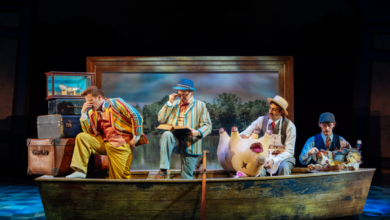
This musical adaptation sees Robert Louis Stevenson’s classic tale transplanted from its original Edinburgh setting to a smoggy, dark and dingy Victorian London. That setting is stunningly brought to life through the staging, which immerses the audience from the moment they approach the theatre door with faded notices adorning soot-covered red brick walls. The classic nineteenth-century urban street setting – worthy of Oliver or Les Mis – gives the cast a huge stage to work with, which is just as well as there are quite a few of them!
Chickenshed Theatre’s entire ethos is built around inclusivity and diversity and the large cast does mean it’s loud, in your face and intense. From street urchins yelling the news to more thoughtful musings on the nature of evil and even of humanity, it always feels like a big production. Credit should go to choreographer Michael Bossisse among others, for this.
For the most part the signing (and even rapping!) is strong, although there are occasions when, especially on high notes, it falls slightly outside the range. There were also a couple of technical issues with crackly mics but the cast dealt with them admirably. The musical itself is completely through-sung, and has been re-ordered chronologically, which means that it is occasionally hard to follow events (although a handy synopsis is provided!) With the exception of a couple of scenes, the musical focuses on Dr. Jekyll/ Mr. Hyde’s interactions with others, rather than his internal struggle. The scenes when it does so are absolutely the standouts – one in which the chorus provide a soundscape, as Jekyll decides whether or not to give into Hyde, before doing exactly that, is stunning.
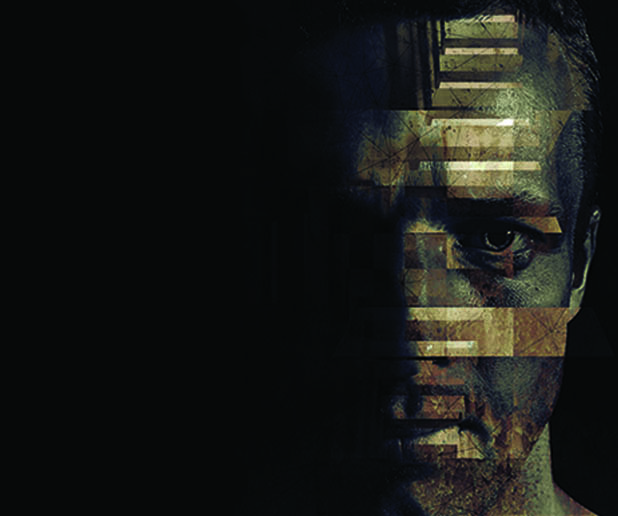
Nathaniel Leigertwood plays Jekyll and Hyde, switching between the roles by unfurling his mane of long, curly hair, which hangs down over his face. He is excellent and while the other performances are strong enough, Leigertwood certainly steals the show.
So the show is a big, brash, dark and moody horror fest. What’s the catch? Well, there isn’t a huge amount of room to really explore the characters in what is an admittedly short show (two thirty-five minute halves). This is a show driven by plot and dominated by big flashy numbers, rather than an in-depth exploration of the themes of the original book. If that’s your thing, then great! If you want to see protracted internal dilemmas exploring the human condition, played out over three hours, then maybe not so much.
Original Author: R. L. Stevenson
Director: Jonny Morton
Musical Director: Dave Carey, Hanna Bohlin
Choreographer: Michael Bossisse
Lyricist: Paul Morrall
Producer: Zeeta Jacobs
Box Office: 020 8292 9222
Booking Link: https://www.chickenshed.org.uk/Event/jekyll-hyde
Booking Until: 20 October 2018